2026 NTUEE Papers of the Year
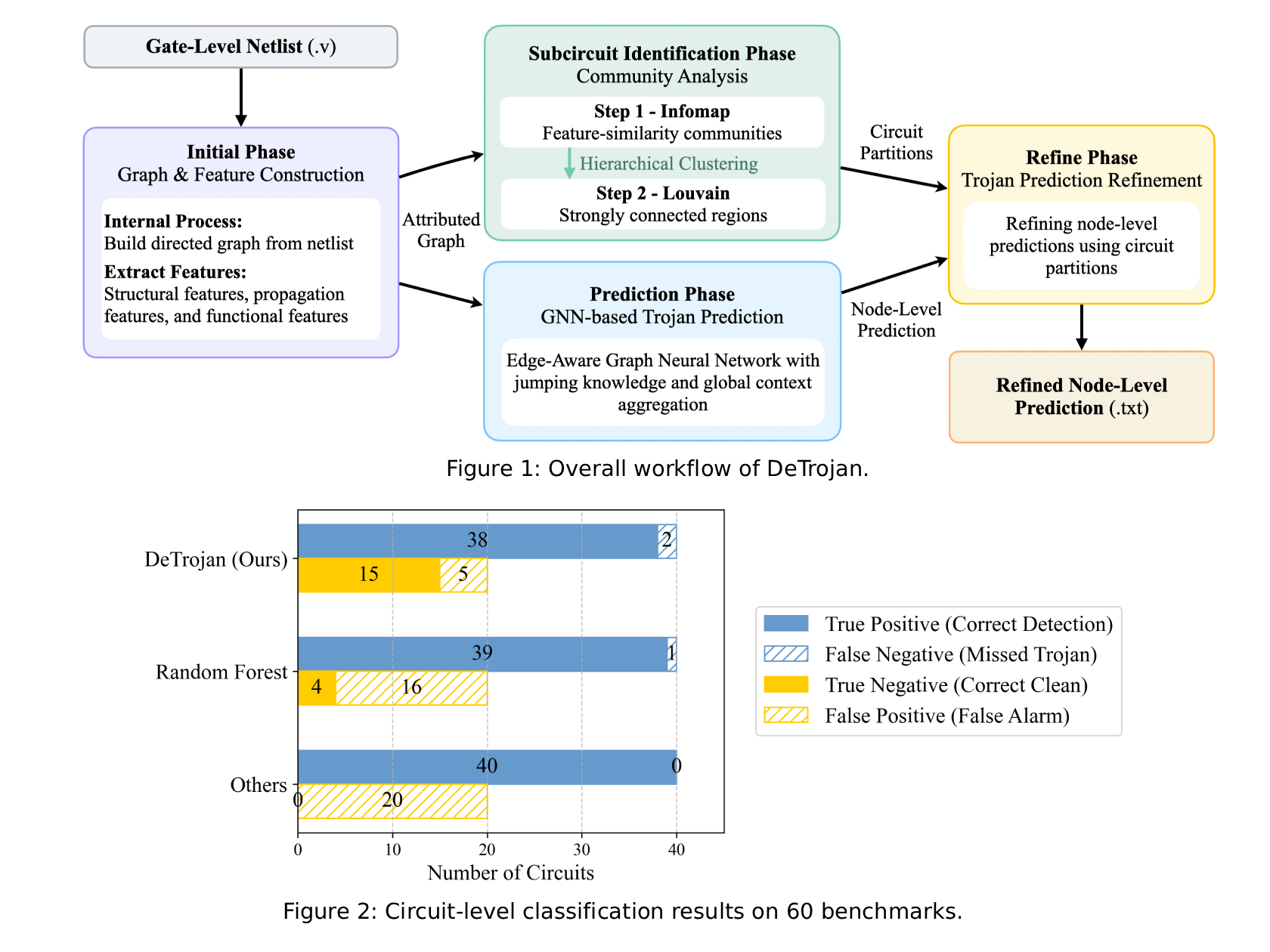
Gate-level Hardware Trojan (HT) detection with Graph Neural Networks (GNNs) often suffers from limited accuracy due to structure-only features and fragmented node-level predictions. We propose DeTrojan, a GNN-based framework that addresses these challenges through three key innovations: (1) functionality-aware feature engineering, (2) an edge-aware GNN with Jumping Knowledge and global context aggregation, and (3) community-aware classification refinement for precise Trojan localization.
Evaluated on the 2025 ICCAD CAD Contest Hardware Trojan benchmarks, DeTrojan achieves a 16.7% improvement in circuit-level accuracy and improves the gate-level F1-score from 0.399 to 0.588. Moreover, integrating our features and refinement modules into existing approaches yields up to a 16.6% accuracy gain and a 2× F1-score improvement, demonstrating the effectiveness and generality of the proposed framework. DeTrojan secured first place in the 2025 ICCAD CAD Contest.
Thesis Title
DeTrojan: Detecting Trojan Circuits Using a Purpose-Built Graph Neural Network with Community-Enhanced Classification
Advisor(s)
Jie-Hong Roland Jiang, Chun-Yan Ric Huang
Author(s)
Chien-Tung Kuo, Chen-Ching Nieh
Recognition
Best Paper Award Winner
Research Field
Electronic Design Automation
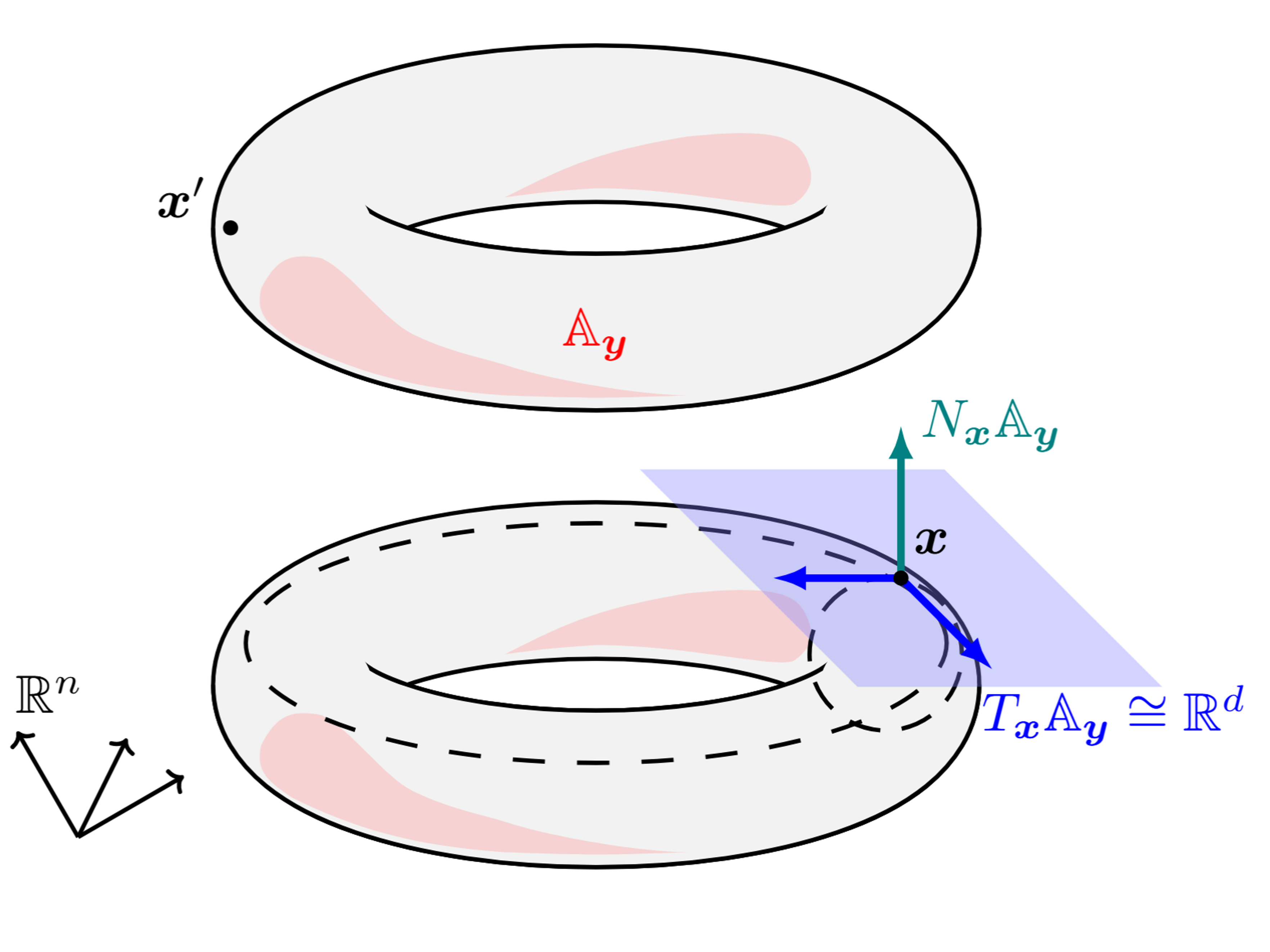
Fourier phase retrieval aims to reconstruct a real valued signal from the magnitude of the Fourier transform of the signal. The solution is typically nonunique and forms a union of tori, each of which is generally called a magnitude torus. The nonconvex geometry of the magnitude torus, together with additional constraints, further complicates theoretical analysis of phase retrieval algorithms such as projected gradient descent. In this paper, we propose two algorithms for manifold optimization on magnitude torus and analyze their performance directly via ordinary first- and second-order analyses. We further evaluate their performance on binary signals and, along the way, obtain an explicit description of the magnitude torus and its tangent and normal spaces. Our results facilitate further analysis of related optimization algorithms on magnitude torus.
Thesis Title
Manifold Optimization on the Magnitude Torus for Fourier Phase Retrieval
Author(s)
Wen Perng, Po-Hung Cheng
Recognition
Best Paper Award Winner
Research Field
Communications and Signal Processing
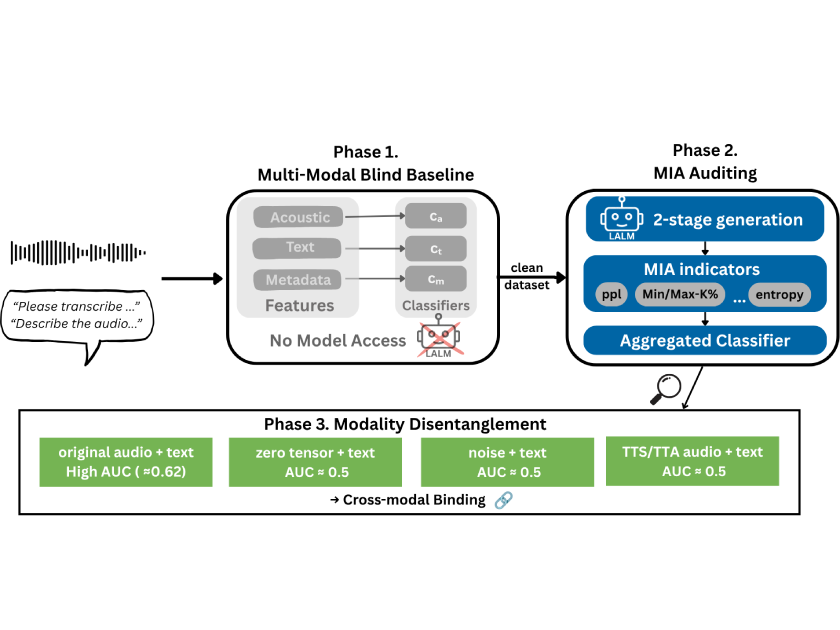
We present the first systematic membership inference attack (MIA) evaluation of LALMs. Using Multi-modal Blind Baselines based on textual, spectral and prosodic features, we demonstrate that common audio datasets exhibit near-perfect train/test separability (AUC ≈ 1.0) even without model inference, thus MIA may primarily detect distribution shift. We therefore introduce a blind-baseline protocol to control for this confound. Under this protocol, we identify that the distribution-matched datasets enable reliable MIA evaluation
without distribution-shift artifacts. We benchmark multiple MIA methods and conduct modality disentanglement experiments on these datasets. The results reveal that LALM memorization is cross-modal, arising only from binding a speaker’s vocal identity with its text. These findings establish a principled
standard for auditing LALMs beyond spurious correlations. Our codebase is available at https://github.com/snooow1029/ALM_MIA.
Thesis Title
Membership Inference Attacks against Large Audio Language Models
Author(s)
Jia-Kai Dong, Yu-Xiang Lin
Recognition
Best Paper Award Winner
Research Field
Data Science and Smart Networking
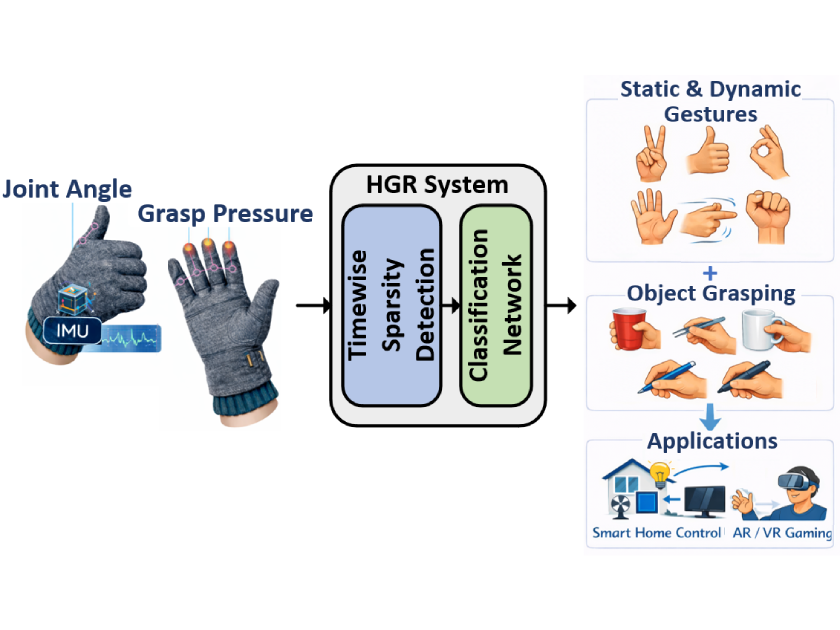
This article proposes a real-time multi-functional HGR accelerator. The design balances accuracy and latency while supporting a large number of gestures by designing a reconfigurable Processing Element (PE) array. The proposed design supports mixed-precision linear and nonlinear computation to be executed on a unified compute core. By utilizing time-wise sparsity of input data, we greatly reduce the overall computation. The processor is designed and implemented in a 40-nm CMOS technology. It can recognize close to 100 dynamic and static gestures combined. The chip supports object-type identification by grasp patterns, a functionality not addressed in prior works. It achieves a 10-times lower latency than the state-of-the-art HGR hardware designs, while maintaining comparable performance in accuracy and energy.
Thesis Title
A Low-Power Versatile Hand Gesture Recognition Processor for XR Interaction
Advisor(s)
Chia-Hsiang Yang
Author(s)
Chun-Yun Cheng*, Cheng-Yan Li* (*: Equally Contributed Authors)
Recognition
Best Paper Award Winner
Research Field
Integrated Circuits and Systems
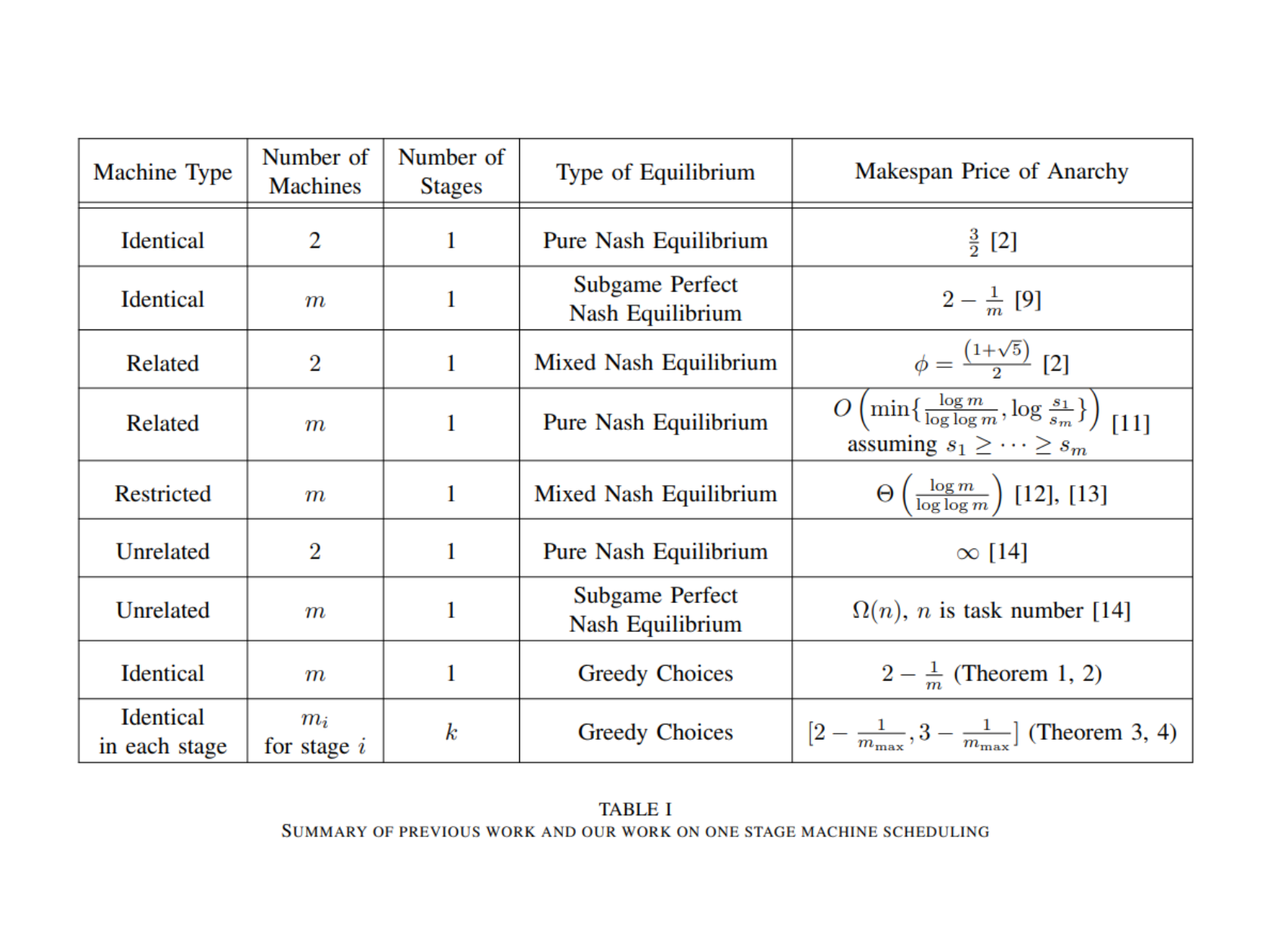
Machine scheduling games study the inefficiency arising when jobs act selfishly in selecting machines. While the inefficiency of selfish behavior in single-stage scheduling systems is well understood, much less is known about multi-stage environments in which jobs must traverse several processing stages sequentially. In such systems, machine choices made at earlier stages influence release times and job orderings at later stages, creating dependencies that do not arise in classical one-stage models. We introduce the multi-stage machine scheduling game, in which jobs pass through a sequence of stages, each containing identical parallel machines, and are assigned according to a stage-wise greedy scheduling rule. This model captures multi-stage processing environments such as data-processing pipelines and manufacturing systems while simultaneously corresponding to a natural online scheduling heuristic.
For the single-stage setting, we show that the worst-case makespan price of anarchy of greedy scheduling is exactly 2 –1/m , matching the classical bound for list scheduling on $m$ identical machines. For the multi-stage setting with heterogeneous stage speeds and m_i machines in stage i , we prove that the makespan ratio is bounded between 2-1/m_max and 3-1/m_max . Our analysis overcomes the challenge that jobs may change relative order between stages, causing release times and downstream congestion to depend on previous scheduling decisions. These results establish that greedy scheduling retains a constant-factor performance guarantee even in multi-stage environments with complex inter-stage interactions.
Thesis Title
Price of Anarchy of Multi-Stage Machine Scheduling
Research Field
Computer Science
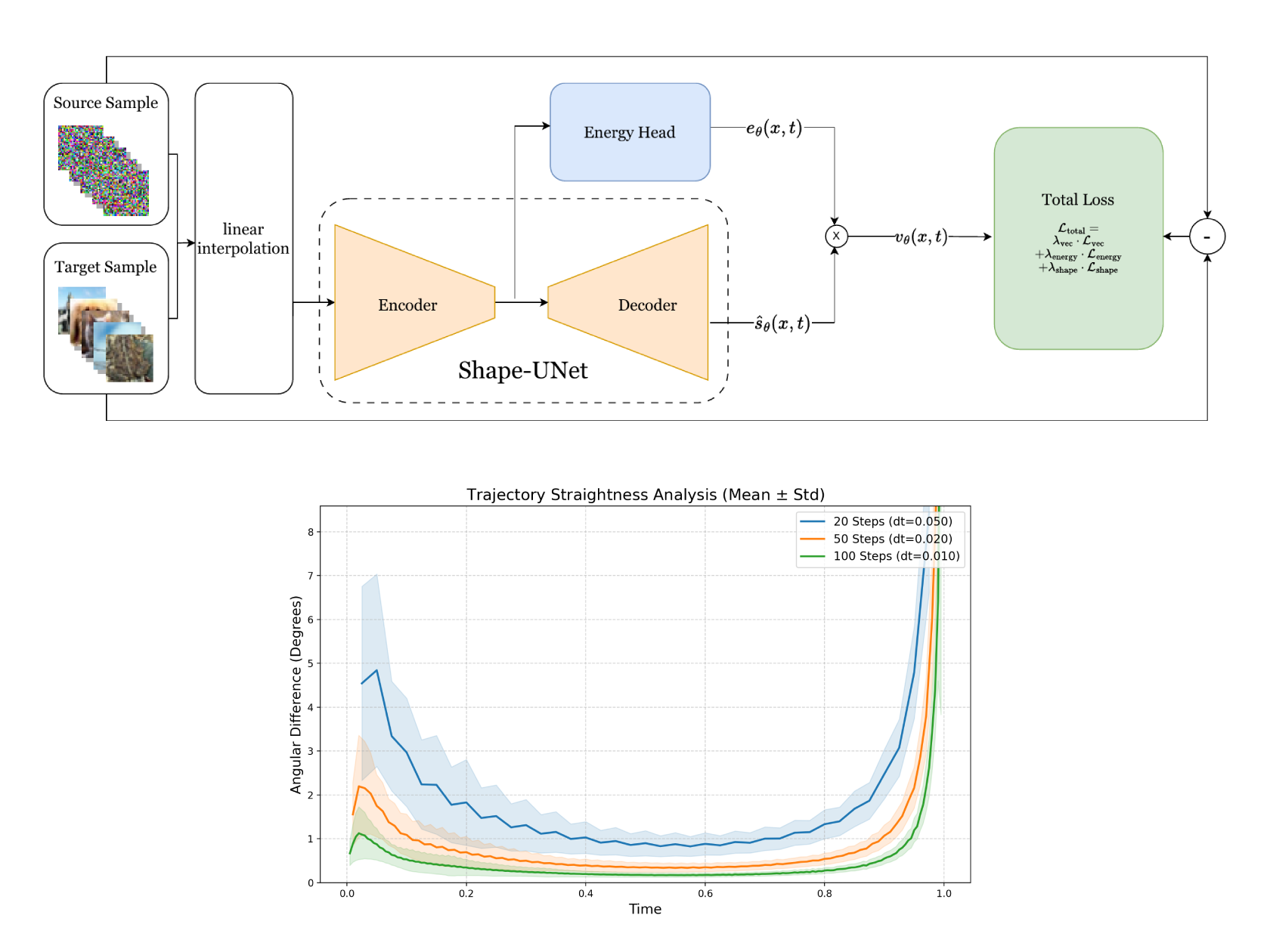
Flow Matching (FM) models offer fast, determin-istic generation via ODE integration, but low-step quality is bottlenecked by uniform ODE timestep schedules. To identify the source of integration difficulty, we first develop an exploratory Energy-Angle Decomposition architecture. Our subsequent geo-metric analysis, motivated by this decomposition, reveals that the angular component (direction) of the FM vector field is intrinsically harder to learn and integrate than its magnitude. Crucially, this angular instability is concentrated near the trajectory endpoints (t ≈ 0 and t ≈ 1), where integration error predominantly accumulates. Based on this insight, we introduce Uniformity-breaking Sampling and Angular Guided Inference for Flow Matching (USAGI). This training-free in-ference strategy constructs a principled, non-uniform timestep schedule that strategically allocates more computational steps to these angularly unstable regions. USAGI acts as a plug-and-play method that consistently improves low-step sample quality (e.g., FID) across various FM variants, including Conditional Flow Matching (CFM) and MeanFlow, demonstrating that flow geometry provides the essential signal for efficient and accurate ODE integration.
Thesis Title
USAGI: Uniformity-breaking Sampling and Angular Guided Inference for Flow Matching
Author(s)
Chi-Tun Hsu, Ping-Jui Chen, En-Sheng Teng, Yu-Cheng Lin
Research Field
Computer Science
Crosstalk noise is a dominant source of error in Noisy Intermediate-Scale Quantum (NISQ) devices, severely limiting the fidelity of parallel gate execution. Standard simulators often treat errors as independent and uncorrelated, failing to capture the temporal dependencies of simultaneous operations.
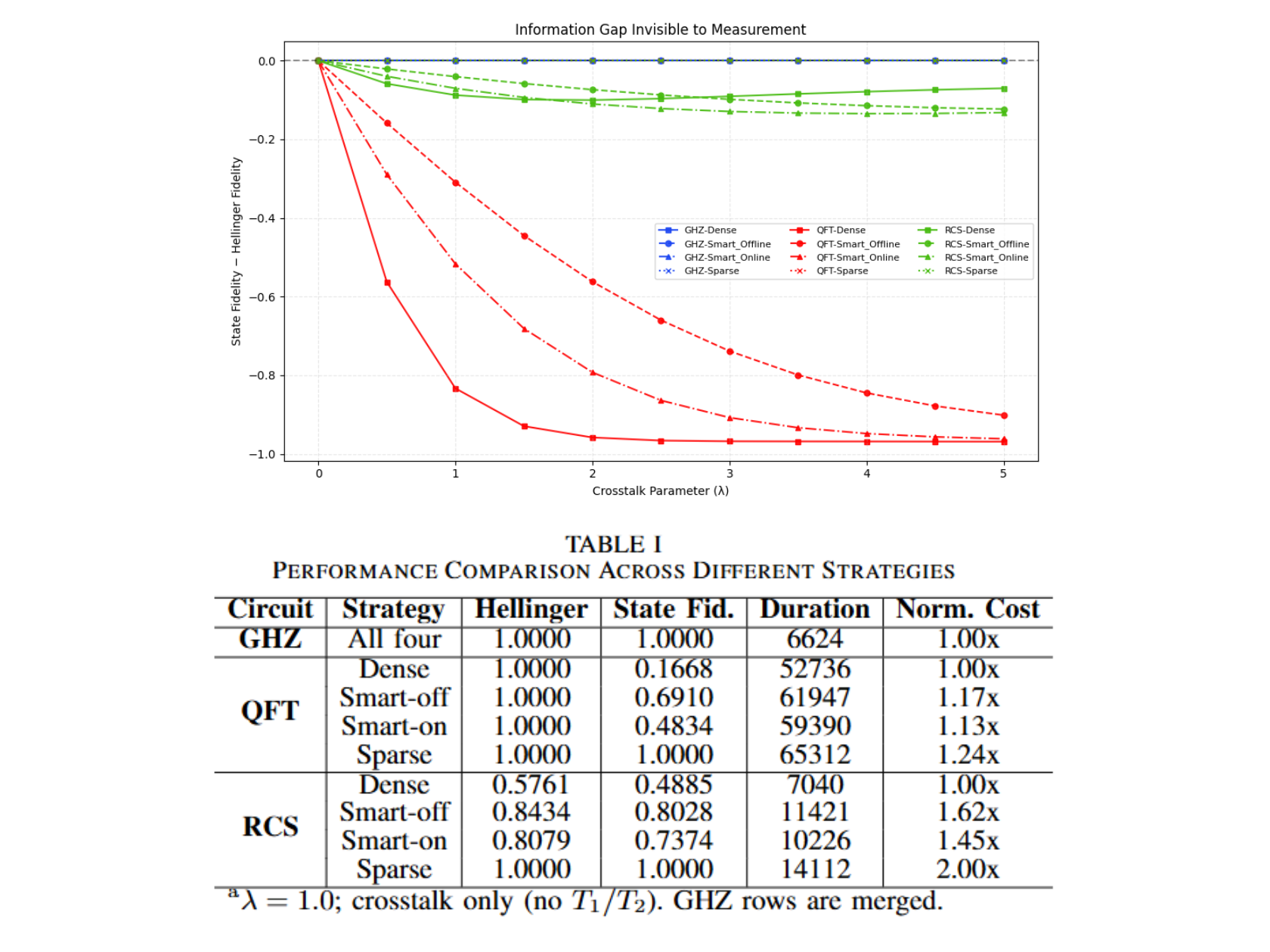
In this paper, we propose a topology-aware, time-dependent crosstalk model that integrates distance decay and coherent phase errors to simulate realistic hardware behavior. We then evaluate a software-based mitigation strategy, “Smart Staggering,” realized as both an offline (iterative, global) scheduler and an online (causal, no-lookahead) scheduler that inject model-guided delays to reduce gate overlap without resorting to full serialization. On a simulated IBM Manila backend, both variants recover most of the crosstalk-induced state-fidelity loss—raising QFT from 0.17 to 0.69 and RCS from 0.49 to 0.80—at only 1.13–1.62× latency, versus the 1.24–2.00× required by full serialization. Notably, the online scheduler matches the offline one despite using only causal information. Revealing the information gap caused by coherent crosstalk, this work optimizes circuit parallelism to provide a scalable software mitigation for NISQ devices.
Thesis Title
Spatio-Temporal Modeling and Software-Based Mitigation of Crosstalk in Quantum Computing
Advisor(s)
James Chien-Mo Li
Author(s)
Pin Tu, Ting-Hsu Lo
Research Field
Electronic Design Automation
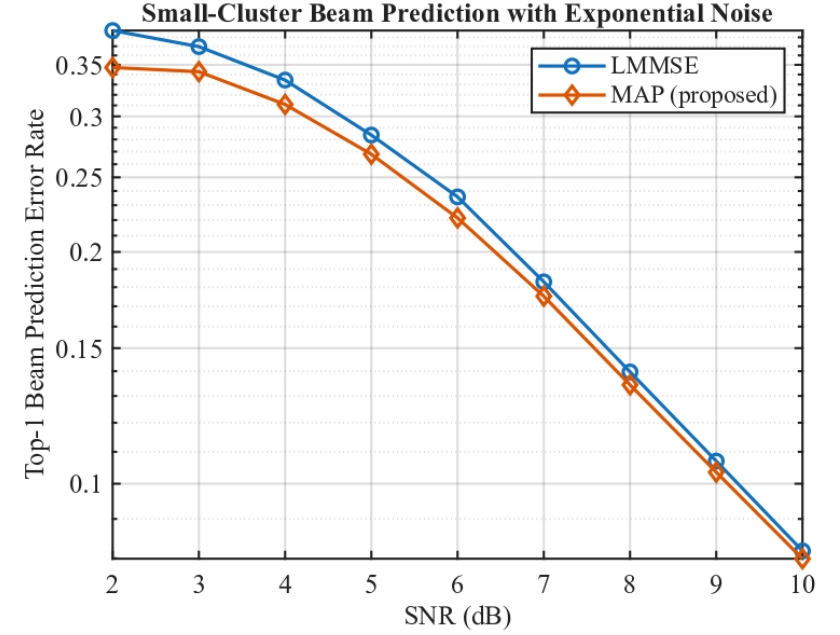
Spatial-domain beam prediction reduces beam-sweeping overhead in millimeter-wave beam management by inferring unmeasured beam powers from partial reference signal received power (RSRP) observations. This work studies downlink beam prediction under the 3GPP clustered delay line (CDL) channel model. For the large-cluster regime, we justify the joint-Gaussian approximation of the RSRP vector using a Berry-Esseen bound and show that LMMSE achieves performance close to the truncated Gaussian-MAP predictor. For the small-cluster regime, where the Gaussian approximation may be inaccurate, we formulate a non-Gaussian MAP predictor using exponential cluster-gain structure and noisy wide-beam observations. Simulation results show that the proposed MAP-based predictor outperforms LMMSE in the low-to-moderate SNR range under the small-cluster regime.
Thesis Title
Spatial-Domain Beam Predictions under 3GPP Clustered Delay Line Channels
Research Field
Communications and Signal Processing
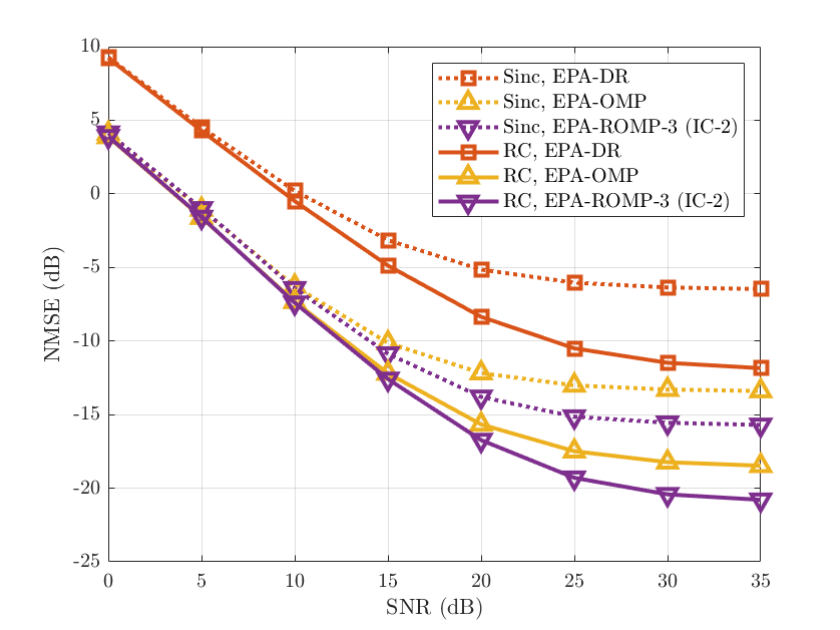
Affine frequency division multiplexing (AFDM) is a promising waveform for high-mobility communications due to its robustness to severe Doppler and doubly dispersive channels. However, channel estimation in AFDM is challenging in the presence of fractional delay and Doppler under limited pilot overhead. This paper proposes an embedded pilot-aided channel estimation scheme based on on-grid orthogonal matching pursuit (EPA-OMP) for AFDM systems. By exploiting the structured sparsity of the AFDM channel matrix in the delay--Doppler domain, the proposed method jointly estimates path delays, Doppler shifts, and gains with controllable superresolution. An iterative interference cancellation strategy is further developed to mitigate inter-pilot-data and inter-path interference. Simulation results show that the proposed approach significantly outperforms existing diagonal reconstruction methods in terms of BER and NMSE with comparable computational complexity.
Thesis Title
Compressive Channel Estimation for AFDM Systems Over Fractional Delay-Doppler Channels with Iterative Interference Cancellation
Advisor(s)
An-Yeu (Andy) Wu
Author(s)
Guo-Shuo Tseng, Chi-Wei Chen
Research Field
Communications and Signal Processing
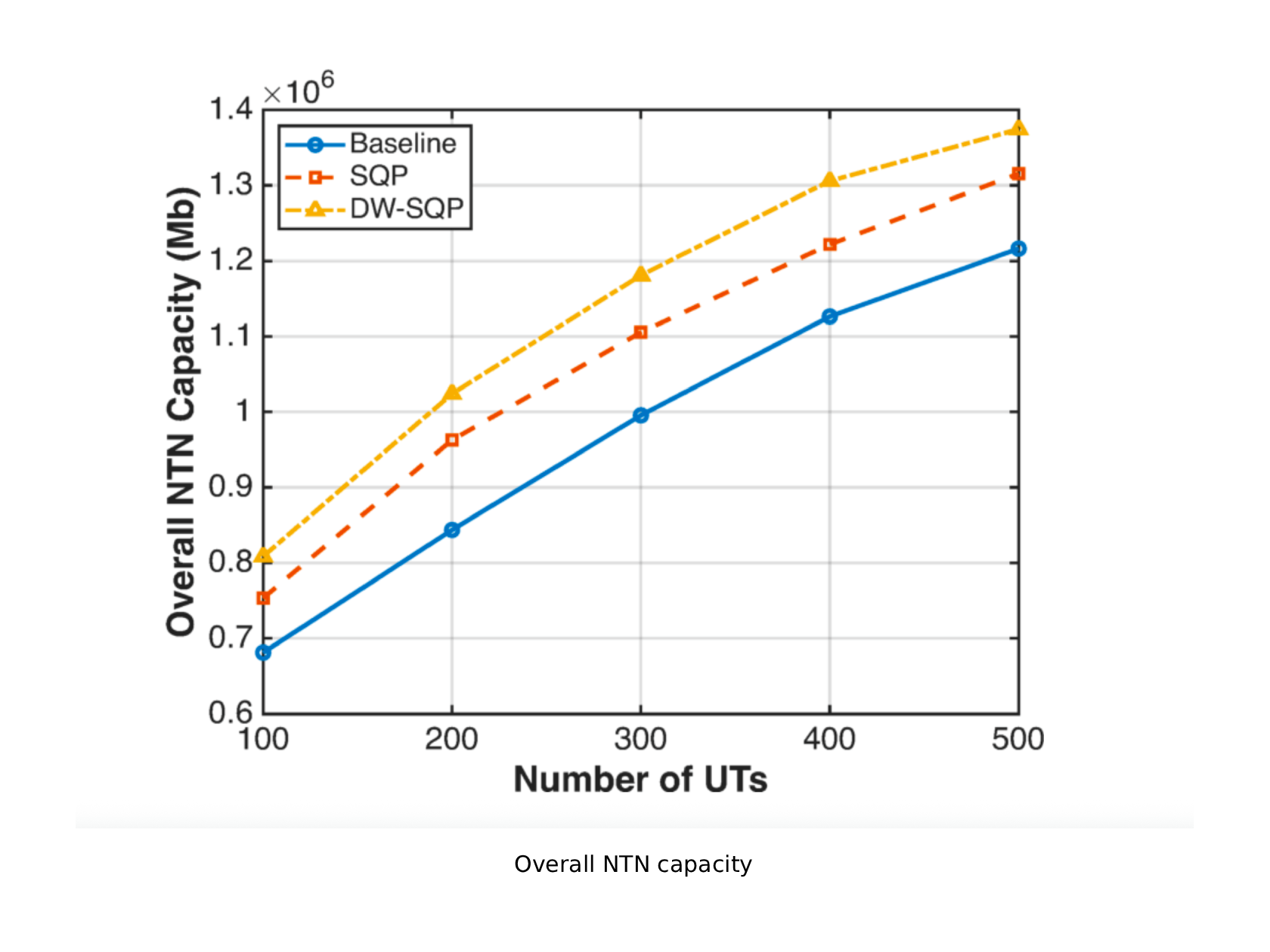
Low Earth Orbit (LEO) satellite communications are a key enabler of 6G global coverage, yet dense constellations face growing backhaul constraints due to the limited deployment of ground-based Feeder Terminals (FTs). As a result, the Feeder Link (FL) becomes a critical bottleneck in end-to-end perfor-mance. This paper addresses the satellite–FT association problem from a mobility management perspective and proposes two dynamic schemes inspired by user handover procedures: Signal-Quality-Prioritized (SQP) and Directional-Weighted SQP (DW-SQP). By enabling active FL handovers based on signal quality and relative motion, the proposed schemes adaptively optimize network topology. Simulation results using real orbital data show that SQP and DW-SQP improve total FL capacity by 5.0% and 7.7%, respectively, compared to a random baseline, leading to average user throughput gains of up to 18.8% and 12.9%. These results demonstrate that dynamic FL management effectively mitigates backhaul bottlenecks in dense LEO networks.
Thesis Title
Mobility-Aware Feeder Link Management: A Signal-Quality and Direction-Weighted Approach
Author(s)
Chen-Ching Nieh, Kuang-Hsun Lin
Research Field
Communications and Signal Processing
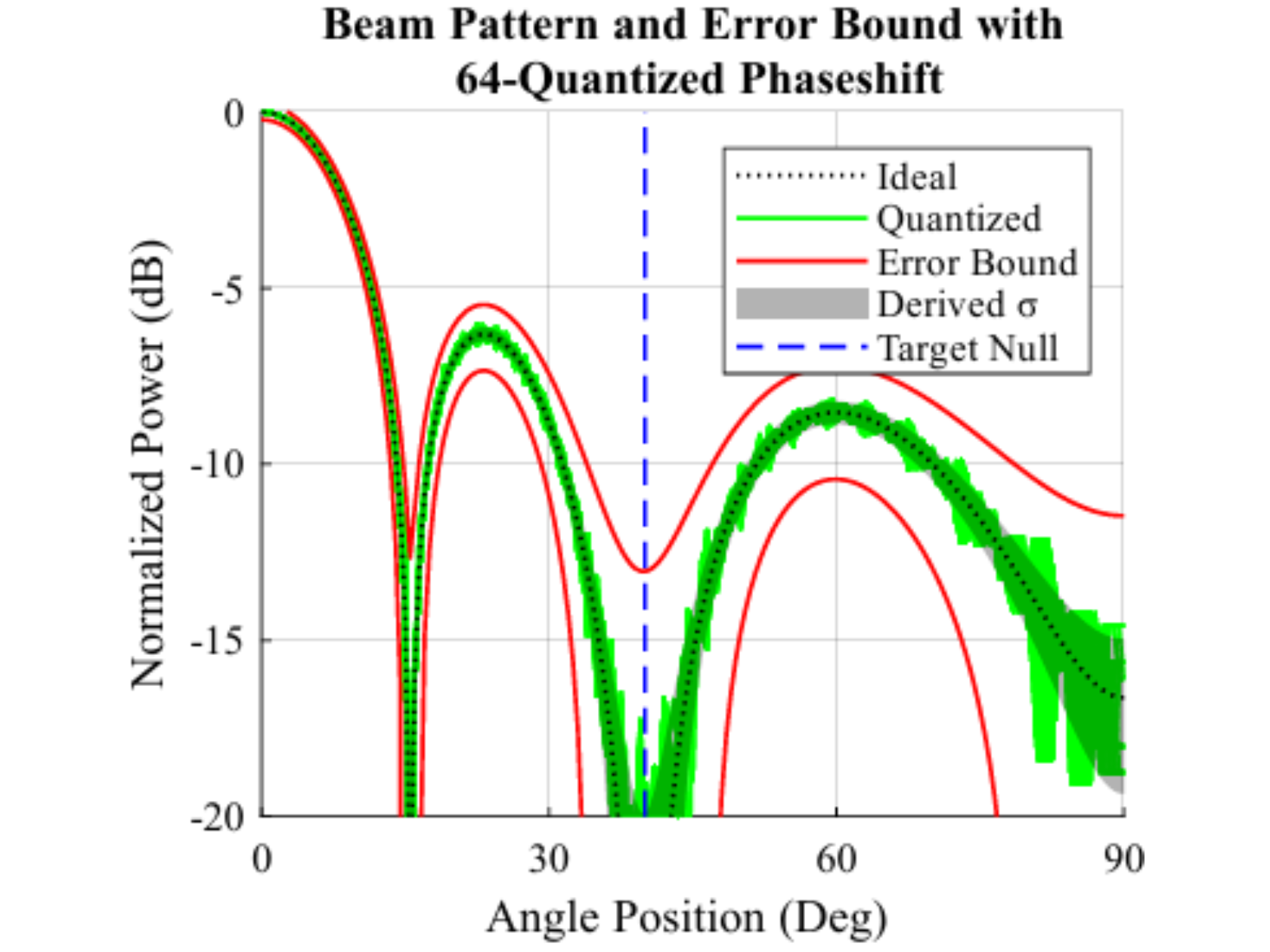
Array systems with assigned nulls are known to be important for wireless systems. However, in experimental measurements, we find it hard to create nulls at certain angular positions. To overcome this problem, we investigate the potential cause. In this paper, we focus on the effect of phase quantization. In particular, we derive the error bound and variance of the beam pattern deviation for any given quantization level. The model is then validated with numerical simulations. With the phase quantization model, we can explain the diminished null and predict the deviation. However, there are other phenomena observed in the experimental measurements that still cannot be explained, which require further study.
Thesis Title
Array Radiation Analysis Under Phase Quantization
Research Field
Communications and Signal Processing
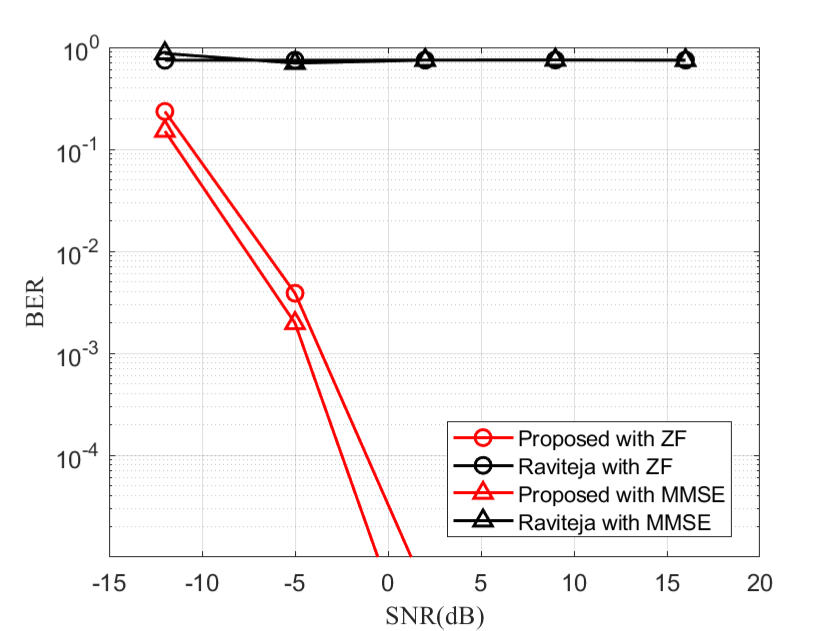
Recently, orthogonal time frequency space (OTFS) modulation has attracted significant attention for low-earth orbit (LEO) satellite and unmanned aerial vehicle (UAV) communications due to its robustness against fast time-varying channels. This paper establishes the input-output relationship of OTFS under reduced-CP (RCP) and full-CP (FCP) configurations. Compared with previous works that neglect phase rotation terms related to CP addition/removal, our refined equivalent channel matrices preserve these terms and avoid CSI mismatch. Simulations show that the proposed matrices significantly improve the single-user error performance and eliminate the error floor. We further extend the result to a multi-user interference channel, where blind interference alignment (BIA) is applied without transmitter-side channel state information. Under suitable channel conditions, the proposed scheme effectively cancels interference and enables the error probability to decrease even under high interference power.
Thesis Title
Blind Interference Alignment for OTFS Modulation in Interference Channel
Research Field
Communications and Signal Processing
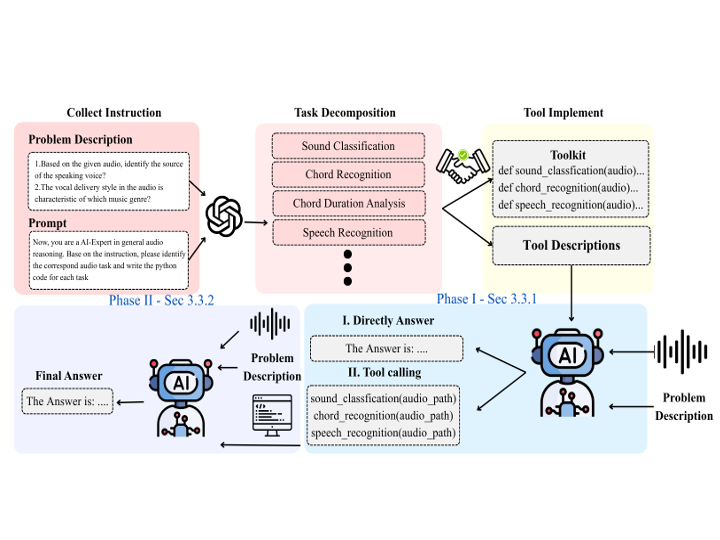
Recent advancements in large multimodal models (LMMs) have shown strong capabilities in audio understanding. However, most systems rely solely on end-to-end reasoning, limiting interpretability and accuracy for tasks that require structured knowledge or specialized signal analysis. In this work, we present Audio-Maestro -- a tool-augmented audio reasoning framework that enables audio-language models to autonomously call external tools and integrate their timestamped outputs into the reasoning process. This design allows the model to analyze, transform, and interpret audio signals through specialized tools rather than relying solely on end-to-end inference. Experiments show that Audio-Maestro consistently improves general audio reasoning performance: Gemini-2.5-flash's average accuracy on MMAU-Test rises from 67.4% to 72.1%, DeSTA-2.5 from 58.3% to 62.8%, and GPT-4o from 60.8% to 63.9%. To our knowledge, Audio-Maestro is the first framework to integrate structured tool output into the large audio language model reasoning process.
Thesis Title
Audio-Maestro: Enhancing Large Audio-Language Models with Tool-Augmented Reasoning
Author(s)
Kuan-Yi Lee, Tsung-En Lin
Research Field
Data Science and Smart Networking
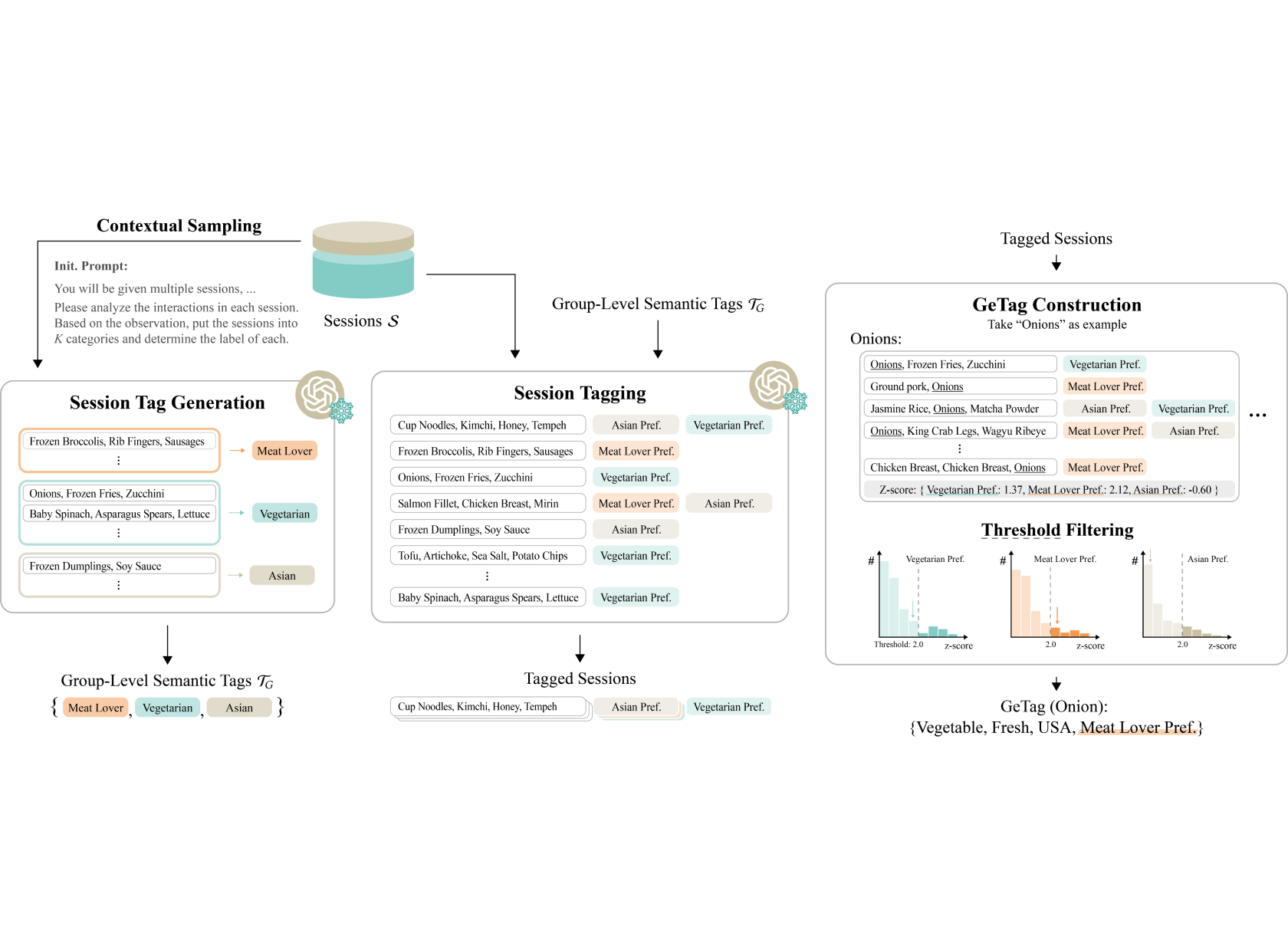
Tags are essential semantic building blocks in modern information retrieval and recommendation systems. While large language models (LLMs) have advanced automated tag generation, existing methods remain largely item-centric and overlook recurring cross-user session patterns that reveal implicit behavioral affinities. We propose GeTag, a group-enhanced tagging framework that uses LLMs to extract shared-intent semantics from collective user session groups and propagate them back to items as group-enhanced tags (GeTags). In this way, GeTag injects collaborative behavioral context into static item representations while operating entirely offline, incurring no inference-time overhead. Experiments on the Food, Games, and Yelp datasets show consistent gains across retrieval, recommendation, and LLM-based reranking tasks, with improvements of up to 425.5\% in NDCG@10 on Games, highlighting its effectiveness under sparse data conditions. An anonymized implementation is available at https://anonymous.4open.science/r/GeTag-C0B8.
Thesis Title
GeTag: Mining Collective Intent via Session-Group Semantics
Advisor(s)
Che Lin, Chuan-Ju Wang
Author(s)
Yung-Yi Lin, Po-Lin Chen, Han-Yu Jen, Miao-Chen Chiang, ChuanJu Wang, Che Lin
Research Field
Data Science and Smart Networking
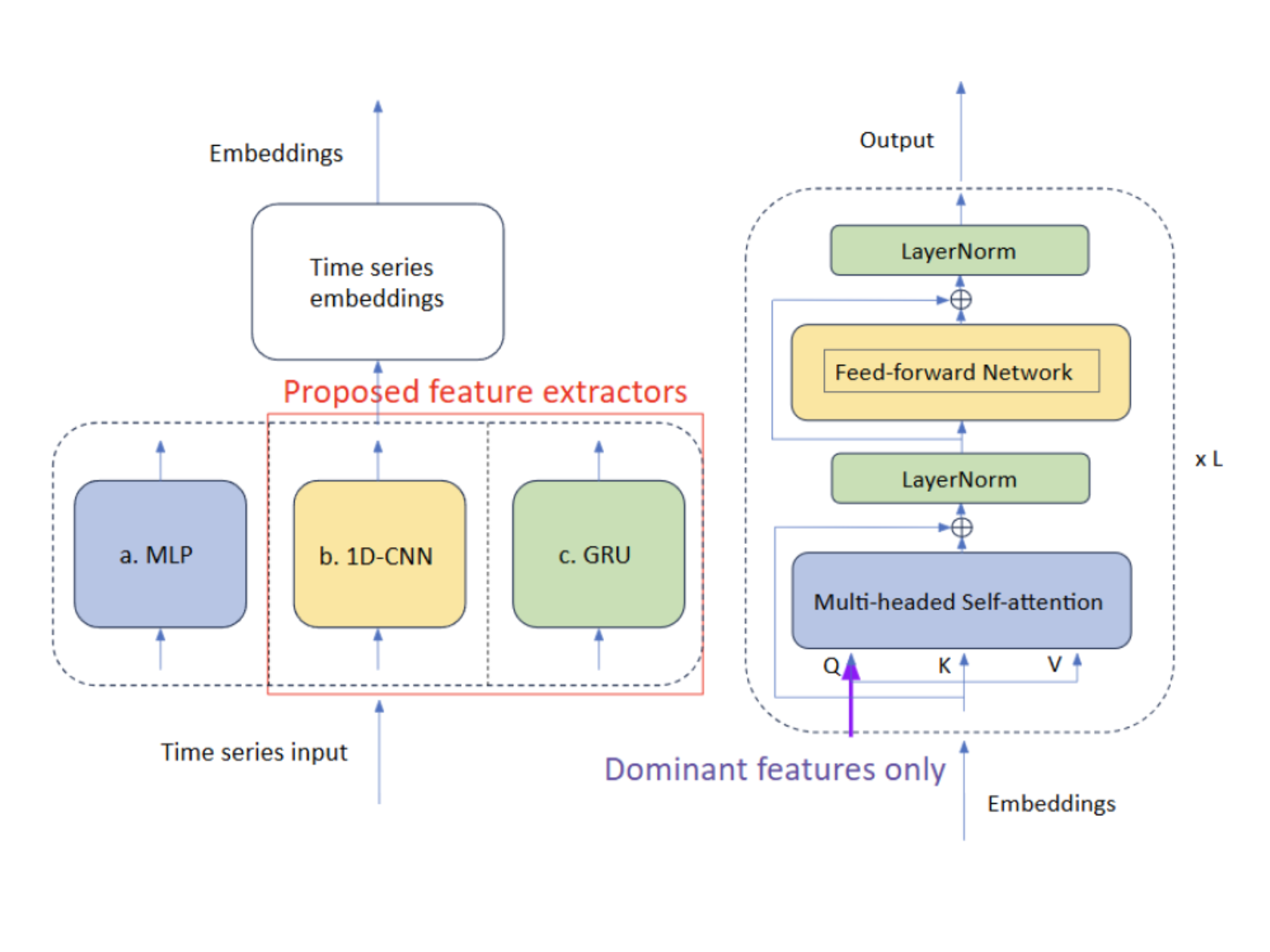
Accurate mortality prediction has been an essential research topic in the medical domain. Mobility data, an informative source for such prediction, receives increasing attention. However, the potential of leveraging mobility data for mortality prediction through state-of-the-art (SOTA) deep learning technologies is still less explored. In this project, our primary goal is to use real-world mobility data collected by smartwatches within one week to predict the 1-year/5-year mortality for people from different age groups. Since the mobility data are time series, we aim to adapt iTransformer, a SOTA model for such data type, with certain improvements to learn and perform the main task. Preliminary experiments demonstrate the feasibility of our mobility data for mortality prediction. We expect that the achievement of this project can help pave the path to more advanced intelligent medicine.
Thesis Title
Mortality Prediction with Mobility Data via Enhanced iTransformer
Author(s)
Jun-Hao Chang, Che Lin
Research Field
Computer Science
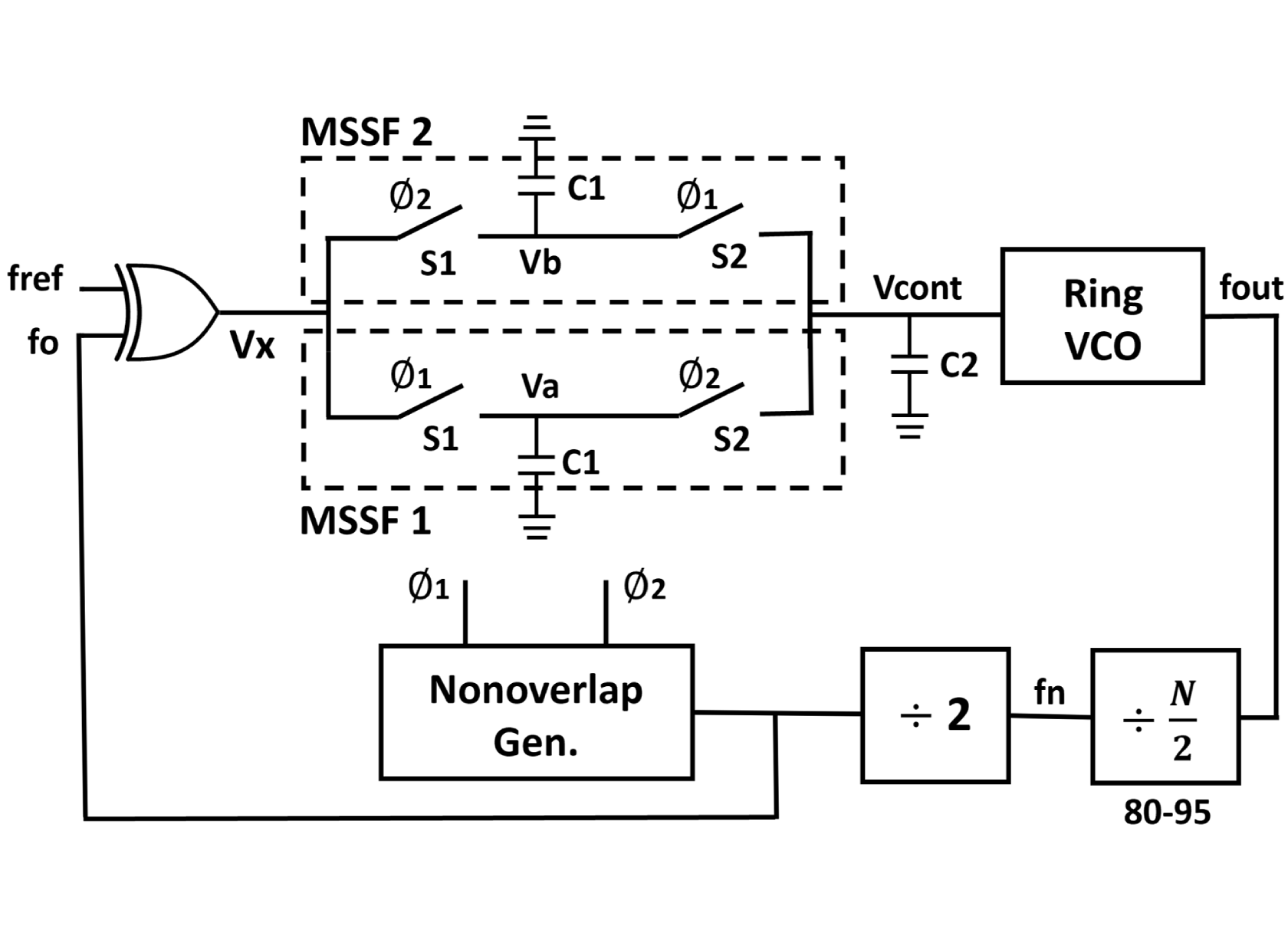
This work presents a wide-bandwidth phase-locked loop (PLL) derived from a type-I architecture with enhanced stability. The PLL employs interleaved dual master–slave sampling filters (MSSFs) operating in dual-phase mode to accelerate the locking process. This structure provides an equivalent sampling rate that is twice the input reference frequency (7.5 MHz). The design achieves a 1.2-GHz output frequency with a closed-loop bandwidth of 4.3 MHz, a phase margin of 51°, and a reference spur level of −91 dBc. The simulated phase noise is −90.0 dBc/Hz at a 1-MHz offset frequency, implemented in a 180-nm TSMC process.
Thesis Title
A 1.2-GHz Phase-Locked Loop with Interleaved Dual Master–Slave Sampling Filters
Advisor(s)
Tsung-Hsien Lin
Author(s)
Yi-En Wang, Wan-Yi Lee, Yu-Ling Chen
Research Field
Integrated Circuits and Systems
This paper presents the design analysis and imple-mentation of a robust-PSRR, energy-efficient low-dropout (LDO) voltage regulator in TSMC ADFP 16-nm FinFET technology. The proposed LDO architecture features a two-stage operational amplifier, a PMOS pass transistor, and a resistive feedback network, which delivers an output voltage of 0.8 V from 1.0 V input voltage. The LDO regulator achieves a line regulation of 0.5655 mV/V and a load regulation of 25.167 mV/A under a load range of 1-10 mA. Post-layout simulations show a current efficiency of 96.06% and power efficiency of 76.849% at a 5 mA load. The device improves its stability with Miller compensation and enhances performance through design analysis. This work demonstrates the trade-offs between efficiency, stability, and area in advanced FinFET nodes, offering insights for future LDO optimization in low-voltage system-on-chip (SoC) environments.
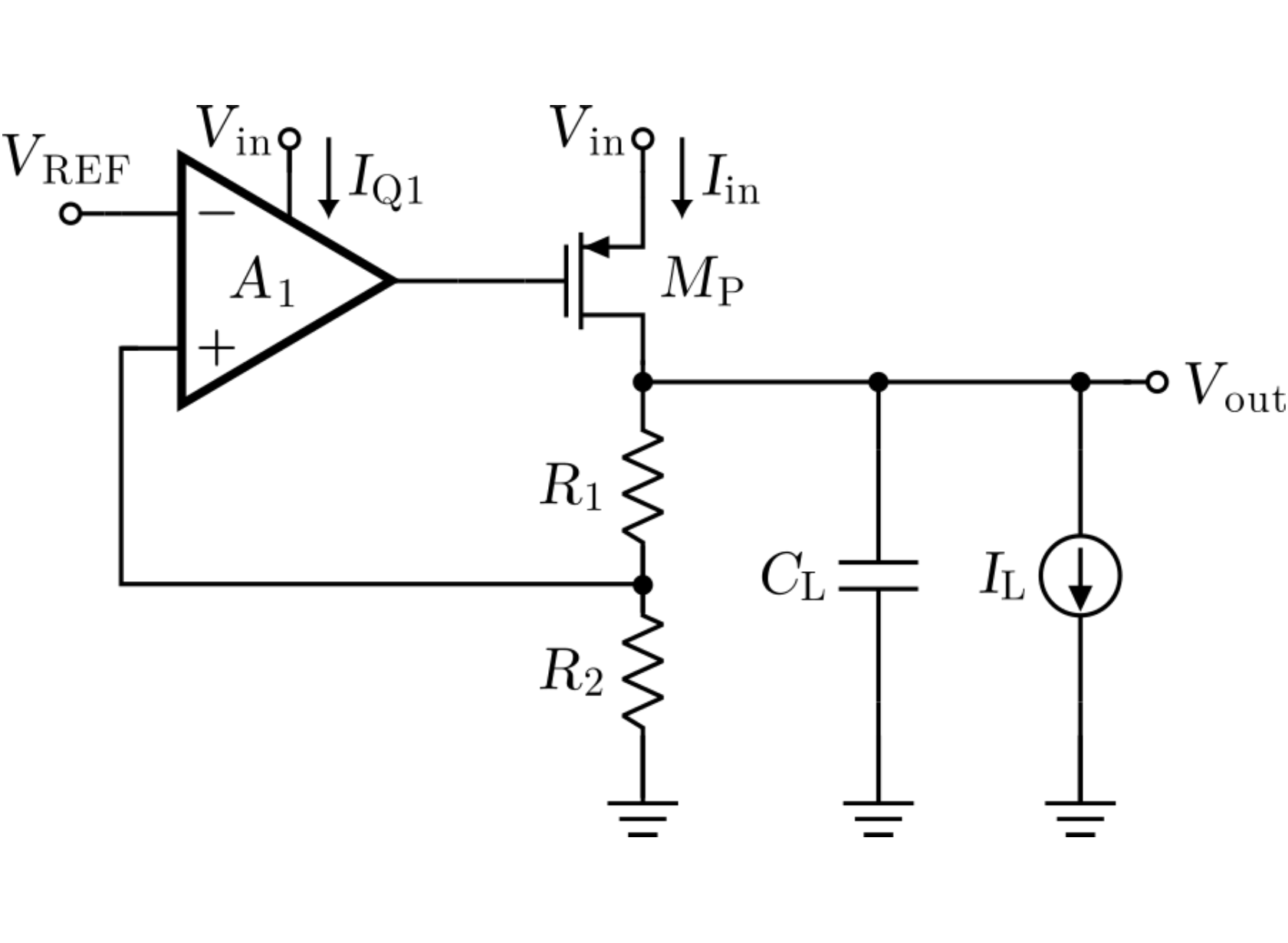
Thesis Title
An Energy-Efficient LDO Regulator with Robust PSRR for SoC Applications in 16-nm FinFET
Author(s)
Yu-Fu Hsu, Yu-Cheng Le, Yu-Liang Wu
Research Field
Integrated Circuits and Systems
Phase Cancellation Line (PCL) is a decoupling structure designed for closely placed antenna elements in arrays. This work designs a PCL structure for a 0.5λ_0spaced, 0.2λ_0 edge-to-edge separated antenna front-end in a 4 by 4 array at 5.8 GHz. We first perform parametric studies on PCL output and PCL input offset, and PCL length to provide general guidance for PCL structure designs. Next, the performance of the optimized PCL structure is verified through Ansys HFSS simulations. Simulation results show a 13 dB, 18 dB, and 34 dB improvement in isolation between any two horizontally neighboring active elements in the worst, average, and best cases, respectively. The radiation pattern shows minimal deviation from the original array pattern despite the additional PCL traces. While the simulation is based on a 4 by 4 array, we note that the design can be easily scaled to N by M due to its repeating structure.
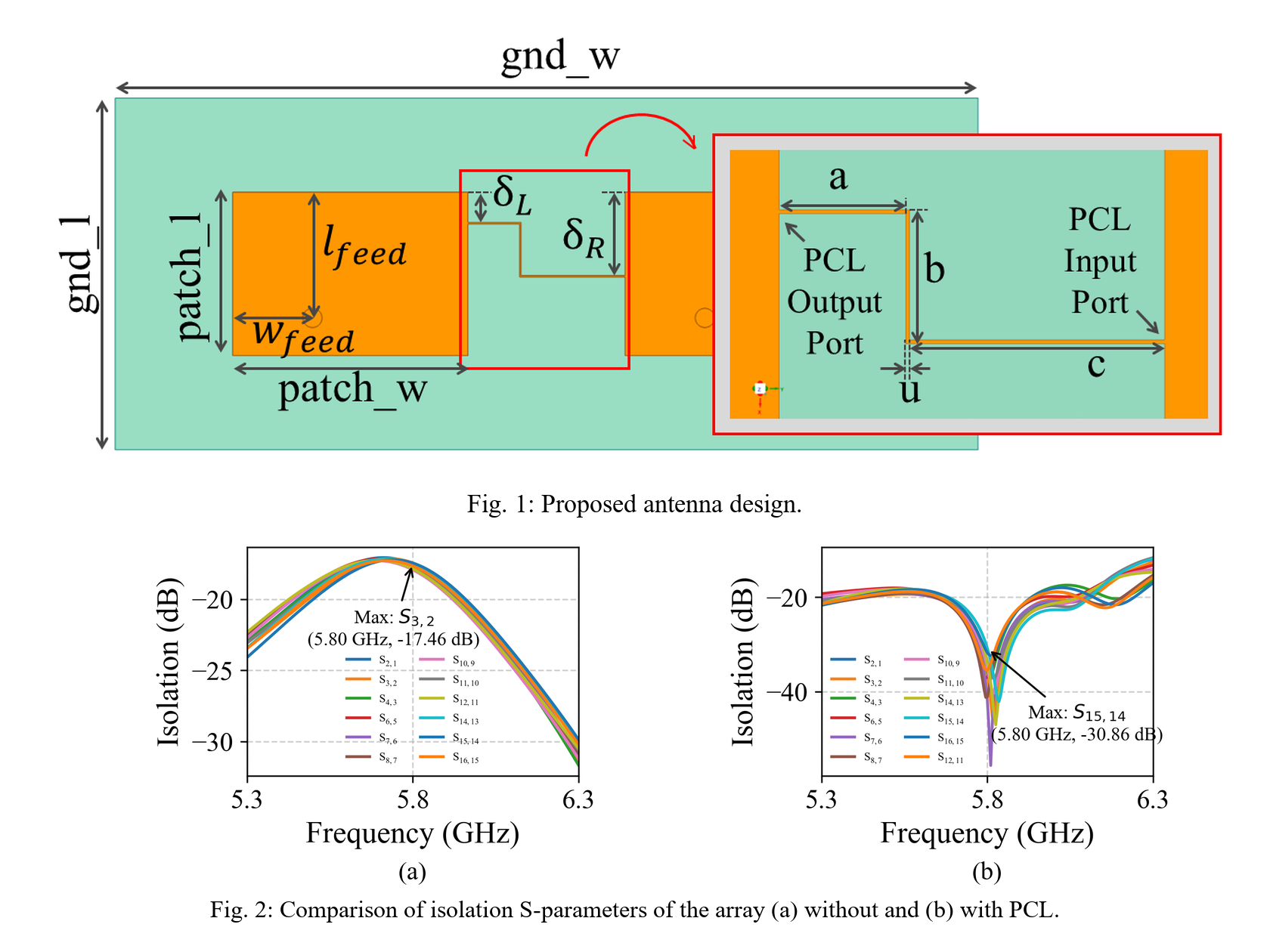
Thesis Title
Mutual Coupling Reduction For Antenna Arrays with Phase Cancellation Line
Author(s)
Zhan-Rui Wang, Chia-Yi Yeh
Research Field
Electromagnetics
This paper proposes a low-dropout (LDO) regulator designed in 16-nm FinFET technology. The proposed LDO employs a constant-gm biased two-stage operational amplifier and a resistive feedback network with Miller frequency compensation. The results demonstrate that the regulator delivers a 0.8-V output from a 1.0-V supply, achieving a line regulation of 0.57~mV/V and an Figure of Merit (FoM) of 0.0792 ps.
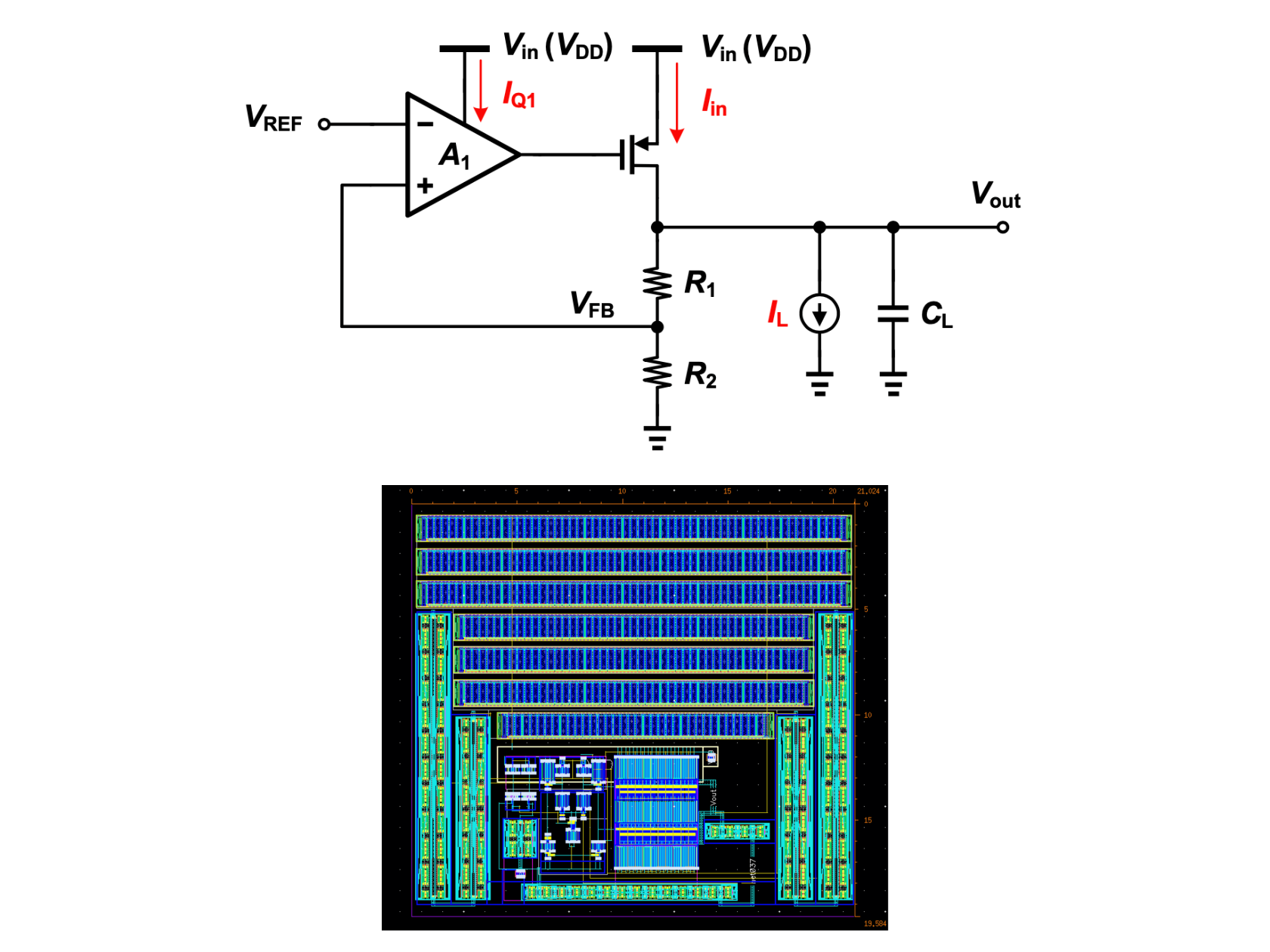
Thesis Title
Design of a Miller-Compensated LDO Regulator with High Loop Gain in 16-nm FinFET
Author(s)
Yu-Cheng Lee, Yu-Liang Wu, Yu-Fu Hsu, and Chun-Shing Li
Research Field
Integrated Circuits and Systems
With the advancement of chip manufacturing processes, the demand for area-efficient power management in System-on-Chip (SoC) applications has increased significantly. In this paper, we propose a Low-Dropout Regulator (LDO) design based on the TSMC 16-nm FinFET process. This circuit converts a precise 0.65 V reference voltage and a noisy 1 V supply into a stable 0.8 V output voltage. The proposed LDO architecture utilizes a two-stage operational amplifier (op-amp) with Miller compensation. It achieves 93.7% current efficiency and 0.4 mV/V line regulation within a core area of only 282.7 µm².
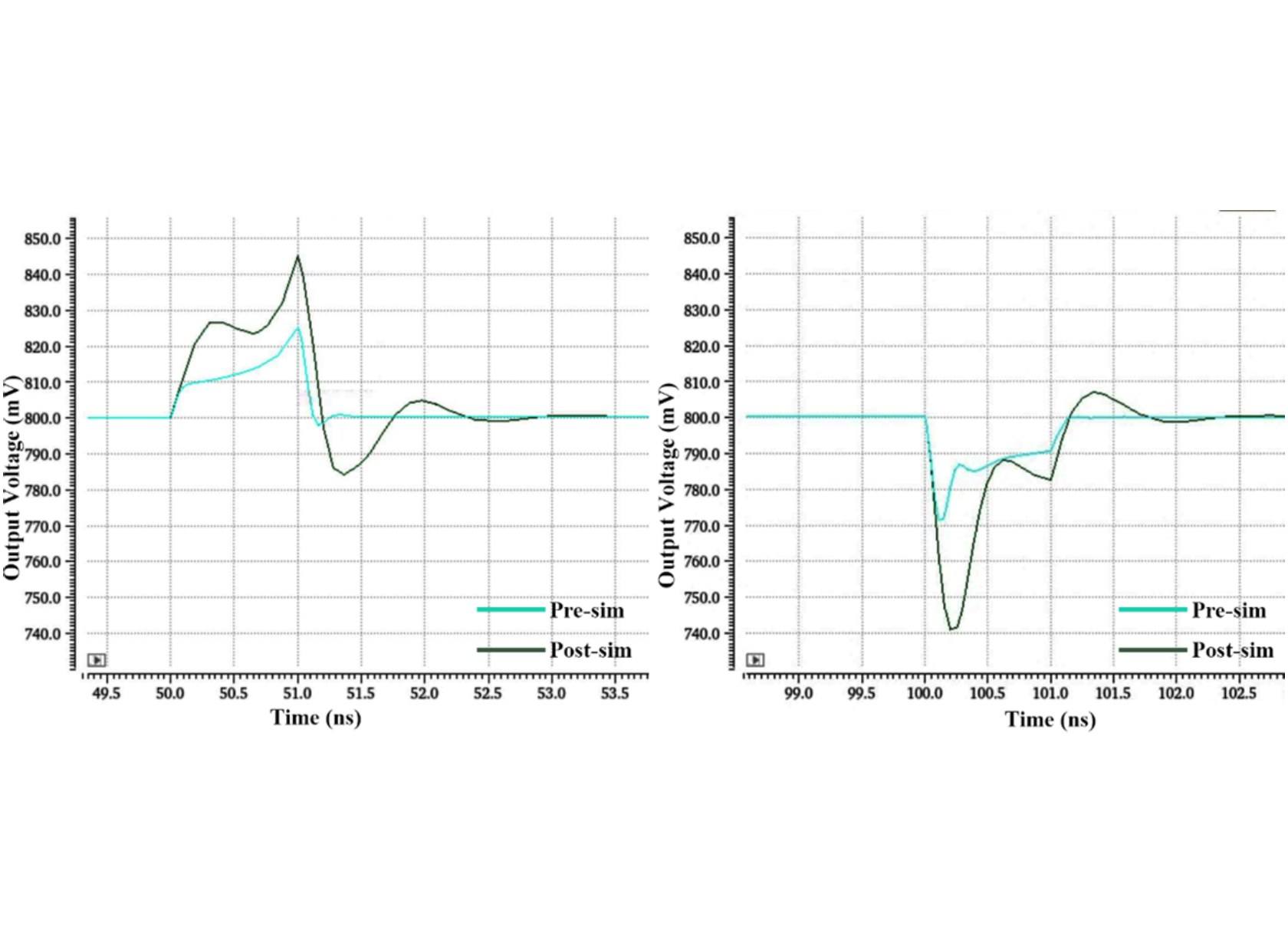
Thesis Title
Design of a High-Efficiency Low-Dropout Regulator with Optimized Transient Response
Author(s)
Kuang-Che, Liu, Kai-Fu, Lee
Research Field
Integrated Circuits and Systems
Differentiating Alzheimer's disease (AD) from frontotemporal dementia (FTD) is clinically important but difficult because early symptoms and EEG patterns can overlap.
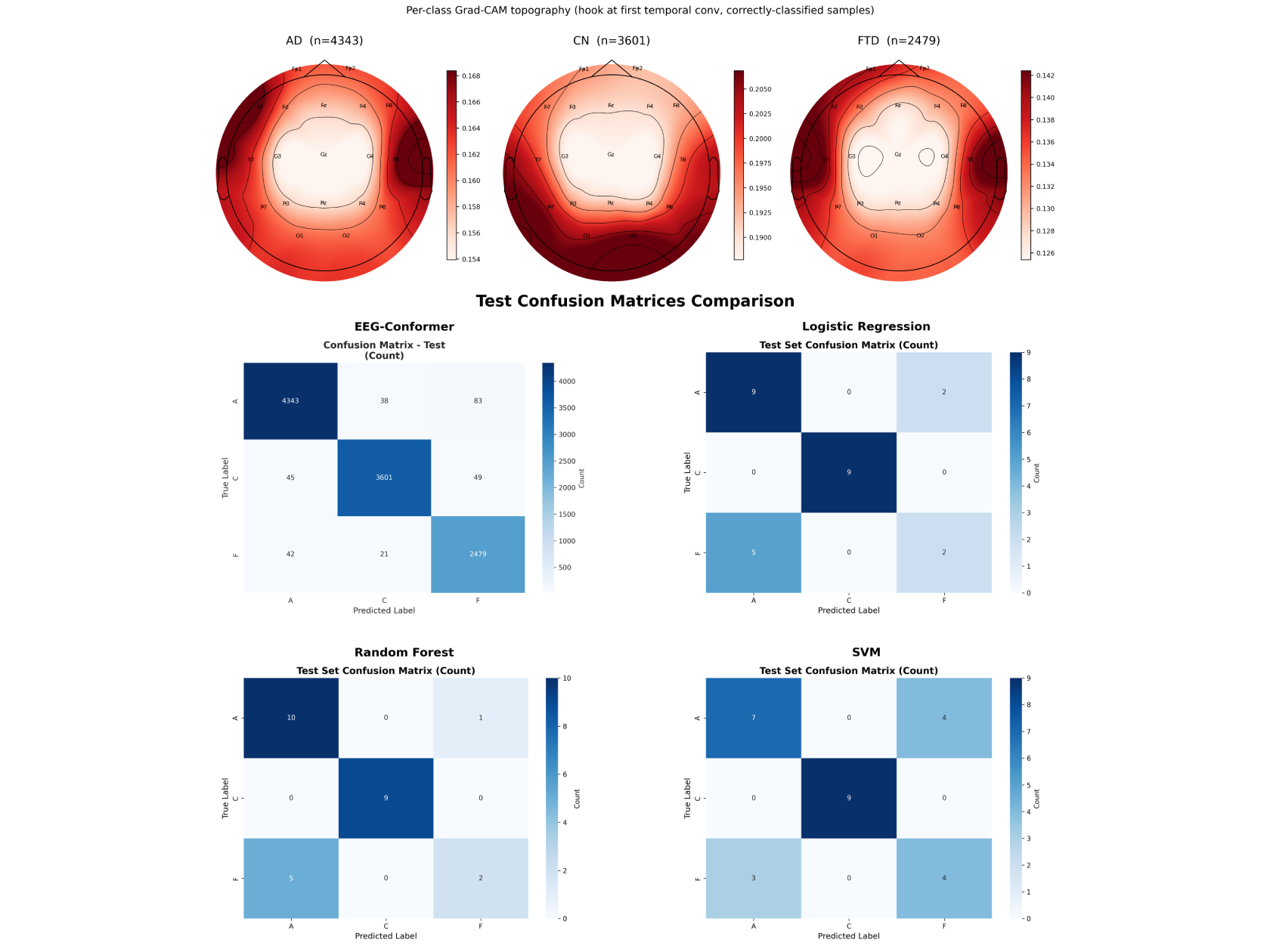
We study EEG-based dementia subtyping on OpenNeuro ds004504 using two complementary pipelines: an interpretable hierarchical graph signal processing (GSP) model and an end-to-end EEG-Conformer.
The hierarchical GSP analysis uses subject-level validation to avoid leakage and reaches 73.59\% balanced accuracy, while EEG-Conformer reaches 97.40\% accuracy and 0.9968 Macro ROC-AUC under a separate segment-level protocol.
We further analyze model design with CNN-only/Transformer-only ablations and interpret EEG-Conformer predictions using electrode-level Grad-CAM topographies.
The results suggest that convolutional EEG tokenization captures local spectral-spatial structure, self-attention improves the difficult AD--FTD separation, and the most important GSP features align with known changes in EEG power, complexity, and functional network organization.
Thesis Title
EEG Analytics for Dementia Subtyping: A Comparative Framework of Hierarchical GSP and EEG-Conformer
Author(s)
Yu-Heng Lai, Yu-Feng Cho, Yen-Wen Chen, Yu Wei Liou
Research Field
Biomedical Engineering

