NTUEE History

The Department of Electrical Engineering was founded in 1943, and two years later, Taihoku Imperial University was renamed National Taiwan University.
NTUEE has long been one of the top choices of high school students who attend the Joint Collegiate Entrance Examination in the category of natural sciences and engineering. The high quality of the entrants is well known. The faculty members are actively engaged in state-of-the-art research.
Over the decades, NTUEE has spun-off several Graduate Institutes, including Photonics and Optoelectronics, Communication Engineering, Electronics Engineering, Biomedical Electronics and Bioinformatics. Together, we offer comprehensive education programs in the EE area. Now, we have more than 120 faculty, more than 800 undergrad students, 1,500 master students and 400 PhD students.
Each year, over four hundred research grants and contracts are awarded by governmental and private institutions, totaling over 800 million NT dollars (26 million US dollars). Over 400 IEEE or SCI papers are published in journals each year by the faculty members. Such fruitful research outcomes with its international

The origin of the Department of Electrical Engineering can be traced back to May 1943, when Taiwan was still colonized by Japan and National Taiwan University was called Taihoku Imperial University. After the surrender of Japan in 1945, the Republic of China reclaimed its control of Taiwan. In November 1945, Taihoku Imperial University was officially renamed as National Taiwan University, and the Department of Electrical Engineering was reorganized and founded as what we see nowadays. There were only 3 professors after the organizational change: Prof. Chi-Hsin Tseng, Prof. Yaonan Yu and Prof. Chin-Shun Yang. In August 1946, which was the first year of NTUEE, there were about 30 students, and half of them came from mainland China. At the time, NTUEE separated its research areas into Power Electronic Engineering and Telecommunications. Most of the students were under Power Electronic Engineering group and only 5 were in Telecommunications group. After 22 chairmen spending 80 years of hard work, NTUEE finally achieves its grandeur today.
In November 1945 when the re-organization was just kicked off, the first chairman was Professor Chi-Hsin Tseng. The original location of NTUEE was at today’s Freshman Classroom Building. It was a wooden Japanese-style architecture and was also used by the Department of Civil Engineering. The economy of the early years after Taiwan’s retrocession was poor. All classrooms were old and facilities were insufficient. Both faculties and students had a hard time since there were no laboratories and no basic device such as oscilloscope which is common nowadays. Even under such a hardship, in August 1947, NTUEE decided to scale up and establish the Graduate Institute of Electrical Engineering(GIEE) with a Master’s degree program. However, it did not open for admission immediately. It was after 17 years, in August 1964, that the Graduate Institute first started to accept applications.
In 1949, Professor Li Chu-Hsien, who was graduated from Tohoku University of Japan, succeeded Professor Tseng as the second chairman of NTUEE. During his tenure, despite the shortage of resources, he still tried hard to set up the first two laboratories on the ground floor in the Japanese-style wooden architecture, which can be regarded as the beginning of the electrical engineering research in Taiwan.
In 1954, Professor Ching-Lai Sheng became the third chairman of NTUEE. The next year in his term of office, he increased the number of classes to two - one for local students, one for overseas Chinese students. Furthermore, he moved most of the NTUEE laboratories to the newly-inaugurated College of Engineering Building (which is nowadays the Department of Civil Engineering). At that time, NTUEE only had two groups: Power Electronic Engineering and Telecommunications. Power Electronic Engineering was related to the construction of power system of Taiwan. Telecommunications used ionosphere to proceed short-wave-long-distance communication. (There was no communications satellite at that time.) It is worth mentioning that on the Telecommunications research, Professor Chien Feng and Professor Guang-Hung Bai set up the Electro-Wave Lab which made great contributions to the development of broadcasting, communication, and TV broadcasts in Taiwan. It has also made NTUEE the leader in the research of telecommunications with high international prestige.

In August 1963, Professor Chao Hsu became the fourth chairman. He took the office for 9 years and made many important development. Firstly, Professor Hsu established the Center of Electronic Computing, which was originally located at the west side of the Department of Civil Engineering. It was also the location of NTUEE at that time. In 1982, after the inauguration of Information Engineering Building(which is nowadays the Computer and Information Networking Center), the Center of Electronic Computing moved in since then. The first Director was Professor Hsing Chang of EE Department. The first computer IBM 1620 was rented from IBM. In May 1964, the first computer was transported to Taiwan and was officially used in June 22 in the same year. Meanwhile, in order to assist NTU personnel to understand how to operate the computer, NTUEE offered the first computer summer course, which lasted for 6 weeks. It was the first computer course that was offered by university, and it has become a regular course since then. Furthermore, the target group did not limit within university personnel but expanded to other institutions and citizen. For the past 37 years (until 2001), more than 45,000 people have attended this course. More than 26,000 people received certificate.

Secondly, he proceeded with the expansion of the size of NTUEE. Around the 1960s, due to the importance of power system and electro-wave communication to technology development, NTUEE has long been the top choice of high school students who attend the Joint Collegiate Entrance Examination in the category of sciences and engineering. In August 1964, the graduate program for master’s degree was opened for application. There was only one student in the first year, S. Y. Lee, who later became the first chairman of Department of Computer Science and Information Engineering in NTU. In August 1968, GIEE’s PhD program was established and opened for admission. In 1972 the first PhD student Chun-Hsiung Chen was graduated and he became the 8th chairman of NTUEE. In August 1969, NTUEE increased to 3 classes (two for local students and one for overseas Chinese students). With the increase of quantity and quality of personnel, the education and research on electrical engineering entered a whole new level.
The other important development during chairman Hsu’s term of office was the establishment of EE Building No.1. At that time, Prof. Hsu gathered MIT EE Department senior professors(Institute Professors): Prof. Lan Jen Chu, Prof. Kung-Chie Yeh, and Prof. Hwa-Chun Torng and discussed about the outflow of talents and the development of national technology. Henceforth, the plan of “Build an Electrical Engineering Building” was formed. They hoped it will be a magnet to keep elites to stay in Taiwan and make contribution to electrical engineering. In 1966, Prof. Hsu told the alumni in the U.S. about his idea when he made a speech in MIT, and shortly aroused huge attention. Ping-King Tien of Bell Lab and his supervisor donated 30 pieces of equipment; Dr. Robert Rines of MIT donated USD$50,000 in remembrance of his father David Rines; IBM also considered donation; Dr. Hsu Chang donated USD$1,500 which he earned by giving in speeches in science seminars for two months. The NTUEE alumni in the U.S. even formed the alumni association. Each year, four of the top-performing alumni came back to Taiwan to deliver lectures in order to help the younglings gain the newest electrical engineering knowledge. At the same year, Chairman Hsu donated USD$12,000 he received after finishing 12 books on basic knowledge of electrical engineering commissioned by Xushi Culture & Education Foundation, as the fund for EE Building No.1. With chairman Hsu’s efforts and alumni’s donation, the EE Department finally had NTU’s approval and received the supporting funding. In January 1968, NTU President Shih-Liang Chien hosted the groundbreaking ceremony of EE Building No.1. In June 1969, the EE1 was inaugurated. It was NTU’s first building with central air-conditioning system, which was phenomenal by the time. Also, it was NTU’s first building completed through fundraising.
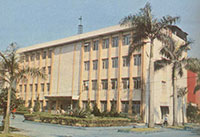
On inauguration, EE Building No.1 was equipped with a central air-conditioning system, an visual-audio classroom, small classrooms, offices, a reading room, research rooms, laboratories, and the state-of-the-art third generation computers(to replace the IBM 1620 computers). Being able to contain many large research equipment, it was considered the most well-equipped research building at the time. It caused profound positive effects on the great progresses of EE Department in the 1980s.
Prof. Chih-Chin Ma succeeded Prof. Hsu as the 5th Chair of EE Department in 1972. He was the first Chair of EE Department who graduated from NTU, and actively promoted many technological developments including computer science. In May 1973, Chair Ma invited Prof. De-Sheng Guo and Prof. Share-Young Lee to establish Department of Computer Science & Information Engineering. By August 1977, Department of Computer Science & Information Engineering was founded. Prof. Share-Young Lee was positioned as the first Chairman. It soon became the second choice of science group of College Entrance Examination, right after NTUEE, until today(2001). Therefore, more and more outstanding high school students has been able to receive training of EECS-related field and contribute the profession to society.
From 1973 to 1974, Prof. Te-Yao Chiang led NTUEE and signed the first international cooperation plan with Wang Laboratories and developed the world’s first Chinese Dot-Matrix Printer by using Wang Laboratories’ typesetters. Meanwhile, to engage semi-conductor field education and research, invited Mr. Irving Ho of IBM to the Department under the quota of “The Far Eastern Group Lecture” which Mr. Yu-Ziang Hsu of The Far Eastern Group provided NTU. With funds from Yen Tjing Ling Industrial Research Institution and National Science Council, he helped to establish Semi-Conductor Lab and Thick-Film Lab, and formed the foundation of NTUEE’s semi-conductor education.

In 1975, Prof. De-Sheng Guo took the duty of the 6th Chairman. As undergraduate level increased to 3 classes, the growing of personnel and research equipment will definitely deplete the space of EE Building No.1. Hence, the plan of EE Building No.2 was proposed. In August 1976, GIEE set 4 groups of admission channel, and further categorized into 7 concentrations: Electronic Circuit, Solid-State Electronics, Electro-Wave, Communications and Signal Processing, Automatic Control, Power Engineering and Computer Science. As the grouping became more specialized and the number of applicants kept growing, the once 20-students small institute grew into a size over 100 people. The acceleration of the growing of GIEE revealed the demand for more space. Although the fund for EE Building No.2 first stage construction did not made into NTU budget until July 1981, the 6th year of Chair Guo’s term of office, the building of EE Building No.2 was much smoother than EE Building No.1 which relied on hardship of Chairman’s advertising and alumni’s donation.
Another achievement during Chair De-Sheng Guo’s term of office was the begin of operation of Yen Tjing Ling Industrial Research Institution. Its history could be traced back to Chair Chao Hsu’s term, when he started to plan for its founding for industrial research and development. During Chair Chih-Chin Ma’s term in March 1975, NTU and Yen Tjing Ling Industrial Development Foundation signed a contract to co-found the Industrial Research Institution. Its inauguration was 2 years after(March 1977), and Prof. Chih-Chin Ma served as the first director. As the budget of school and government was not much, the fund and space provided by Yen Tjing Ling Industrial Research Institution meant a lot to all departments and institutions in College of Engineering.
As number of people increased, the equipment needed to follow. In 1977, with the help of alumnus Dr. Min-Hung Hung, Hong's Foundation for Education & Culture donated NTD$ 5,000,000 and founded Electronics Circuit Lab, hosted by Prof. Chu-Hsien Lee. It was the first well-equipped lab of the Department. In addition, Dr. Hung donated funds to purchase sets of expensive microwave equipment. The Electro-Wave Group has since then entered the field of microwave education and research.
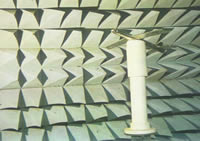
In 1980, Non-Reflection Lab was established. The Electro-Wave Group which was already strong in theoretical basis got great support in experiments. Aside from these, Ministry of Education aided the Department to purchase a VAX 780 mini computer in 1981.
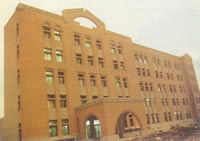
In 1981, Prof. Hui-Zhong Yu became the 7th Chairman. Within 2 years, aside from elevating the quality of faculties and striving for MOE funds for departmental lecturers to study abroad, Chair Yu inherited the mission of expanding EE Building No.2 from former Chair: Prof. De-Sheng Guo. In 1982, MOE assigned a NTD$ 52,500,000 fund and the first stage construction of EE Building No.2 started. Meanwhile, due to the technologies of computer getting mature and that computer and automation were destined to cause revolutionary affection to future industries, The Grduate Institute of EE added CAD(Computer Aided Design) group in August 1982.
Prof. Chun-Hsiung Chen(the first PhD graduated from NTUEE) became the 8th Chairman in 1983. Chair Chen emphasized on research and spent much efforts on promoting domestic research. First, he visited faculties one by one and reached consensus, asking faculties to apply for research project and funds, in addition to teaching. To set strict standards for research, Chair Chen drafted “Paper Scoring Process” with the assistance of Prof. Lin-Shan Lee and Prof. Jin-Fu Chang, asking faculties and students to strive for research. The implementation of this process set a landmark for NTUEE’s academic foundation and internationalization. In the same year, NTUEE’s “Contents of Research” started publication to encourage faculties to gain research funds and publish papers. The following few Chairmen after Chair Chen used the same way to elevate the research of the department.
In 1985, Prof. Jin-Fu Chang succeeded as the 9th Chairman. Chair Chang continued former Chair Chen’s actions to promote research. With the help of Ministry of Education’s technological policy, NTUEE received more quota for the number of faculty. Chair Chang took advantage of MOE’s policy on recruiting faculty and National Science Council’s policy on rewarding research, and the faculty recruiting of NTUEE grown substantially. The research-oriented feature of NTUEE was thus formed, which Chair Chen and Chair Chang played key role. In 1985, the number of papers NTUEE published on international journals was 2.4 times than that of 4 years earlier. Graduate student population reached 206(MS) and 36(PhD). In his book “NTU and Me,” former NTU President Chao-Chung Yu quoted the letters between him and Chair Chang in 1986, which told the story of NTUEE’s transformation. Former President Yu complimented in his letter, “The efforts of Professor Chen has finally fruited, and there is a successor. It is most valuable that the academic atmosphere of department was formed.”

In August 1987, Prof. Jing-Shown Wu took the position of the 10th Chairman. GIEE established Photonics and Optoelectronics concentration. Chair Wu built up Department/Institute Development Committee to make long-term plans. The representatives were elected from and by faculties, and Department Chair be the Chairperson of the Committee. Since then, the development direction could be foreseen. Meanwhile, the budget of EE Building No.2 West Wing 2nd stage construction, which former Chair Chang tried to obtain, was done planning during Chair Wu’s term(December 1987), and was included in NTU budget in August, 1988. August 1989, GIEE opened Biomedical Engineering group, and the number of groups opened for admission totaled 10.


The 11th Chairman was Prof. Si-Chen Lee in 1989. The next year(September 1990), the Molecular Beam Epitaxy Laboratory which former Chair Wu strived for was founded. With the dust-free room renovated in Chair Wu’s term, the research for avant-garde technology of semi-conductor could be carried on. The founding of Communication Research Center was decided in Departmental Meeting in November 1991 and done in March 1992. Prof. Jing-Shown Wu took the position of the first director of the center. In August 1992, Graduate Institute of Photonics and Optoelectronics(GIPO), which was promoted by Chair Lee, was formed. Prof. Hung-Chun Chang positioned as the first Chair. The admission for master program of GIEE’s Photonics and Optoelectronics Group was shifted to GIPO.
In November 1991, Chair Lee gave the thought of establishing college during departmental meeting, and asked Vice Chair Prof. Powen Hsu to plan. In April 1992, Prof. Hsu proposed the plan. With the agreement of departmental meeting, they planned to combine related units in College of Engineering and found College of Electrical Engineering. The structure of “No concentration in undergraduate level, specialized in graduate school” was formed, and included in the long-term plan of EE field. In June 1992, collegial meeting of College of Engineering approved the founding of College of EE. This was the beginning of systematic promotion of CSIE field research and development in the country. Due to NTU temporarily froze the formation of new units, it passed through administration meeting, academic meeting and reached school meeting in 1996. After twice discussion of school meeting, it passed the first-time-ever anonymous vote in school meeting. College of EE was formed as the 9th independent college of NTU. 3 years after(August 2000), Department of Computer Science joined and the name of college was changed into College of EECS. The ideal soon affected the academic field in the country. Many schools referenced NTUEE’s proposal of founding college and founded their colleges of CSEE. “CSEE field found independent college” has since then become a trend among educational institutions in the country. NTUEE created this trend and has made profound impact.
In 1992, Prof. Powen Hsu succeeded as the 12th chairman. Since “Paper Pointing System” has run for many years, and there was a need to adjust journal recognition and point calculation, he formed academic committee to work on this. Meanwhile, the research quality of the department rising, more and more college graduates stayed and pursue master or PhD degree. In a few years, the number of students who chose to study for higher degree in-country instead of abroad mounted half of total, and became unexpected valuable human resource. Besides, due to the founding of College of EE, and the relaxation of policy of tele-communication, and the growing of related industries, Chair Hsu saw the need of establishing Graduate Institute of Communication Engineering(GICE), and passed school meeting in March 1993. In August, the west wing of EE Building No.2 2nd stage construction completed. The 4800-ping(15868 sqm) building, which went through 7 Chairmen, had all been ready for use. The 500-ping(1653 sqm) area of east wing had been used by Library of College of Engineering since its completion in August 1985. After it moved into NTU New Main Library in November 1998, the space was returned to College of EE. By then, the research result of NTUEE was outstanding. Plus all kinds of developments, NTUEE received comment of “reborn” in the evaluation of CSIE related institutes which MOE delegated The Chinese Institute of Electrical Engineering. NTUEE’s first-class reputation in the country has also stood firmly since then.
In March 1993, Chair Hsu invited Prof. Maw-Huei Lee to edit the department’s history, in order to organize existing documents. The history of NTUEE today mainly inherited Prof. Lee’s documentations.
In August 1995, Prof. Soo-Chang Pei took the 13th Chairman. Meanwhile, PhD program of Graduate Institute of Photonics and Optoelectronics(GIPO) was founded and opened for admission. The PhD program in optoelectronics group of GIEE switched to GIPO. In 1996, the department held its 50th anniversary. Through international conferences and multi-media presented department introduction CDs, the international-level education and research of NTUEE was opened to the world. The CEOs and managers of electronics, EE, CS enterprises also came back to the event as outstanding alumni. NTUEE’s contribution to the country’s economy was evident.
In August 1997, College of EE was officially founded. NTUEE, GIEE and GIPO thus subordinated to College of EE. Former Chairman Prof. Powen Hsu was positioned as the first Dean. The PhD program of GICE, which was approved by MOE in March 1994, was founded together with GICE’s master program by then, subordinated to College of EE. GICE had 3 groups: Electromagnetics(EM) Group, Communication Group and Signal Processing Group. The PhD programs of EM group and CSP group in GIEE were switched to GICE.
Other memorable events in Chair Pei’s term are as follow. In January 1998, due to computer aided design(CAD) tool had been mature in the industry, the research of CAD/CAM no longer belonged to EE department exclusively. Plus the integrated circuit developed vibrantly, GIEE thus changed the name of CAD group into VLSI/CAD group. In addition, Chair Pei assisted to establish the Optical Imaging Lab and the Interdisciplinary MRI/MRS Lab, to further promote the research in the department.
In 1998, Prof. Way-Seen Wang succeeded as the 14th Chairman. In order to meet the industry’s strong demand of manpower of electronics, EE and CS specialty, NTUEE started to evaluate and plan for the professional master degree, and opened in the next year, same as BS degree application admission(August 1999). At the time, electronics, EE and CS field not only were the mainstream of industries, but also had decisive impact on the nation’s economy. In April and September 1999, NTUEE held “Entrepreneur Lecture” and “Academic Lecture” respectively. NTUEE “Outstanding Alumni Medals” were granted to 3 fabulous alumni in the industry: Min-Hung Hung, Robert Tsao, and Barry Lam, by NTU President Wei-Cho Chen in the first Entrepreneur Lecture. Academician Simon M. Sze was granted the medal in the first Academic Lecture. The events attracted huge media live interview and broadcast, and marked the everlasting performance of NTUEE alumni.
Starting April 1999, NTUEE received Intel Corporation’s donation of a set of equipment and founded Networking and Multimedia Lab. Same month, College of EE made faculty evaluation method. NTUEE followed the college’s decision and asked its faculties to be evaluated periodically in terms of teaching, research and service, to maintain the high performance of NTUEE. In May, NTUEE received unanimous good views in NTU academic unit evaluation. Committee members encouraged the department to pursue higher achievements on the basis of existing outstanding performances, and mount world-class level.


In January 2000, NTUEE passed MOE’s 1st round college academic outstanding progress plan, and received generous support of instrument, equipment and personnel. In August, Electronic Circuit group and VLSI/CAD group combined into Integrated Circuit and System (ICS) group.


In 2001, Prof. Sy-Yen Kuo succeeded as the 15th Chairman. Same year, Graduate Institute of Electronics Engineering was formed, and Prof. Liang-Gee Chen positioned as the first Chairman. The admission of Solid-State Electronics group and ICS group of Graduate Institute of Electrical Engineering were switched to Graduate Institute of Electronics Engineering. Due to the rapid progress of EE field, the technology kept innovating, and the industry roared. To match world trend, the required courses of undergraduate level referred to renowned schools in the world and were revised with Prof. Jenn-Gwo Hwu’s assistance. Meanwhile, in order to strengthen the connection with alumni, the department started to publish “NTUEE Alumni’s Newsletter” and received vigorous feedbacks from alumni. Starting 2002, due to the execution of “National SoC Project” and “Cultivation Plan for College Information, Electronics, Electrical Engineering, Photonics and Optoelectronics, and Communication Departments and Institutions Admission Quota Expansion,” the number of faculty grew from 60 to 100 within the 3 years from 2002 to 2004. It was the fastest growth in department’s history. Although it elevated the research ability greatly, it also caused the lack of lab spaces. Fortunately, alumnus Barry Lam, Founder and Chairman of Quanta Computer, and alumnus Kuen-Yao Lee, CEO of BenQ and AU Optronics Corp, each donated a building, so that the department could have larger area to further elevate teaching and research.
The signing ceremony of “Barry Lam Hall” took place in NTU 57th Anniversary banquet, November 15th, 2002. It was signed by alumnus Barry Lam, Founder and Chairman of Quanta Computer, and NTU President Wei-Cho Chen. The building’s ground-breaking ceremony was held by Chairman Barry Lam, President Wei-Cho Chen and College Dean Hsu on, January 8th, 2003. Beam-raising ceremony was held by Dean Pei, former Dean Hsu and Chair Kuo on October 28th, 2003. On June 5th, 2004, the construction of the third building of NTUEE, Barry Lam Hall, was completed. Chairman Barry Lam, President Wei-Cho Chen and College Dean Pei attended the inauguration ceremony. Barry Lam Hall took space of 3440 ping(11386 sqm), including 1 floor of basement, 7 floors above ground, 17 classrooms, 36 labs, 33 research rooms, 10 discussion rooms, and a ladder-type international conference room to house over 200 people. Currently the spaces first floor are used as classrooms, second floor is for “Aim for the Top University Project,” third floor for college administration offices, 4th to 6th floors for labs of 3 research groups of EE division(IC, CSP, CS), 7th floor for mutual projects of NTUEE and Quanta Computer. Faculties’ offices and discussion rooms are also at 4th to 6th floors.
In 2003, Solid-State Electronics group renamed as Nano-Electronics group.

In August 2004, Prof. Ruey-Beei Wu took the 16th Chairman. Graduate Institute of Electronics Engineering established the Electronic Design Automation (EDA) group. The EE Department established an educational group accordingly.
In September 2004, the 1974 alumnus Kuen-Yao Lee, CEO of BenQ and AU Optronics Corp donated a building named “Ming-Da Building.” The construction started in May, 2005 and was completed in January, 2007. Ming-Da Building has 7 floors above ground and a basement. The total area is 3800 ping(12562 sqm). First floor is public area, including restaurant and exhibition space. Second floor and third floor are for teaching and experiment. 4th floor is the collaboration area with BenQ and AU Optronics Corp. 5th to 7th floor are faculties’ offices and labs.
In February 2005, “Industrial R&D Master Program” was founded. 53 students enrolled in the first year. In September, the program opened for international students. Four students from Jordan, Saudi Arabia and Vietnam enrolled.
June 2005, Prof. Si-Chen Lee was positioned as NTU President.
In January 2006, the department started “Aim for the Top University Project” in compliance with NTU. In August, PhD program of Graduate Institute of Biomedical Electronics and Bioinformatics was founded. The admission of GIEE’s biomedical engineering group PhD program switched accordingly. Prof. Pai-Chi Lee was positioned as the first Chairman. Power Engineering group renamed as Power System/Power Electronics group.
In November 2006, 1957 alumnus Academician Simon M. Sze, 1970 alumnus Barry Lam(Chairman of Quanta Computer), and 1974 alumnus Kuen-Yao Lee(Chairman of BenQ Cooperation) were granted “2006 NTU Outstanding Alumni.”
In January 2007, the department passed Institute of Engineering Education Taiwan’s 1996 “Engineering Accreditation Commission(EAC).”

In August 2007, Prof. Jenn-Gwo Hwu took the 17th Chairman.
In November 2007, the Barry Lam Gallery donated by Barry Lam(Chairman of Quanta Computer) was established. The Gallery was proposed by Prof. Hsueh-Jyh Li in 2006. 1971 Alumnus Mr. You-Jia Huang made “Barry Lam Gallery Establishment Plan Draft.” Chair Ruey-Beei Wu proposed the “Barry Lam Gallery Project Outline” to Quanta Computer, and was approved with Chairman Lam’s generosity. The first exhibition was in concordance with NTU 79th anniversary on November 15th, 2007, “NTU Barry Lam Gallery Opening Exhibition: Lightning of Brushes and Whirlpool of Ink – Paintings and Calligraphy of You-Jia Huang.” Alumnus Mr. You-Jia Huang provided nearly 120 pieces of work, including all styles of Chinese calligraphy, paintings of natural scenery, creature and people, Chinese ink paintings. Same year, 1957 alumnus Academician Chen-Shui Tsai, 1961 alumnus Dr. Chia- Tung Lee, 1971 alumnus Ming-Kai Tsai(MediaTek Chairman), and 1974 alumnus Jonney Shih(Asus Computer Chairman) were granted “2007 NTU Outstanding Alumni.” Alumnus Barry Lam was granted NTU Honorary Doctorate.
In June 2008, the department held the first-time undergraduate Premium Project Production audition, to encourage students to devote in project productions and cultivate core abilities of research and practice. The winners were granted with awards in graduation ceremony. In November, 1960 alumnus Junyuan Du(Chairman of Orient Semiconductor Electronics Ltd.) and 1981 alumnus Dr. Jau Huang(Chairman of Cyberlink Corp.) were granted “2008 NTU Outstanding Alumni.”
Apart from the above-mentioned, the visibility of NTUEE on the international stage began to shine brightly after many years of quiet and perseverant efforts. In the field of electrical engineering, the department's recognition by international institutes such as Institute of Electrical and Electronics Engineers (IEEE Society) is remarkable. Since 1999, almost every year, professors from NTUEE have been elected as fellows of the society. In a single year, such as in year 2010, despite the financial crisis of that year, as many as five professors were elected as fellows, setting a standard for the nation. As of 2015, the department had accumulated over fifty fellows from various international prestigious societies. The proportion of IEEE fellows among the department's faculty is as high as 25%, demonstrating that the department's long-term devotion has received international recognition.
In 2010, Professor Yen Hsu-Chun took over as the 18th department chair, and continued to expand altruistic service initiatives beyond high schools. In January 2011, the department started publishing the "NTU Electrical Engineering Popular Science Series" articles, with a commitment to promoting electrical engineering-related science education for the public. In May of the same year, a six-week, two-day-a-week "Preparatory Electrical Engineering Course Camp" was introduced for incoming undergraduate students who had already been admitted, in the aim of helping them become more familiar with electrical engineering and adapt smoothly to university life. This initiative received acclaim and media attention. At a time when universities were adjusting enrollment quotas to improve their rankings in entrance exams, this move allowed NTUEE to maintain its leading position in the engineering category.
In terms of teaching, year 2013 was another peak year for NTUEE. Apart from five professors being elected as IEEE and SPIE fellows that year, there were also five recipients of the National Science Council (now Ministry of Science and Technology) Outstanding Research Award. Numerous other awards, such as the Pan Wen-Yuan Foundation awards, were also delivered to NTUEE faculty. This shows that, while actively engaging in both internal and external service, the department continued to strive for technological research advancements, which are crucial within the academic system.

In August 2013, Professor Liao Wan-Jiun became the first female department chair of NTUEE. During her term, in line with the government's promotion of "Industry-Academia Alliances," the university-level "TSMC-NTU Joint Research Center" organized by Professor Lee Si-Chen and the university-level "MediaTek-NTU Innovation Research Center" organized by Professor Lu Shey-Shi were established. These centers implemented the "industry sets challenges, academia provides solutions" model, creating a win-win cooperation between industry and academia. The budgets for both industry-academia alliances exceeded one billion NT dollars annually. Alumni from the class of 1952, including President Chung Shuang-Lin of Taigene Electric Machinery, actively contributed to the establishment of the "Smart Electrical Machinery Laboratory," enhancing talent development and industry-academia cooperation in the field of electrical machinery. Additionally, in the field of teaching and research, a Data Science Working Group, led by Professor Lin Tsung-Nan, was established. Apart from jointly establishing a Data Science Master's and Ph.D. Program with the NTU departments of Computer Science, Mathematics, and the Academia Sinica's Institute of Information Science and Institute of Statistical Science, this group actively assessed, integrated, and strengthened the research capabilities of department faculty in data technology. This effort aimed to fully grasp emerging trends in the Internet of Things (IoT), cloud computing, social networks, and big data.
Regarding physical resources, apart from the MK Innovation Hall, donated in April 2012 by one of the department's alumni, Mr. Tsai Ming-Kai and jointly constructed with the College of Bioresources and Agriculture, various optimization activities were actively underway, particularly the renovation of the EE-II Building. During her term, Chair Liao actively used alumni donations to beautify the public spaces of the first floor's south, west, and north halls of EE-II Building, further enhancing the atrium on the second floor. This effort aimed to provide a high-quality environment for faculty and students to enjoy learning and foster creativity.
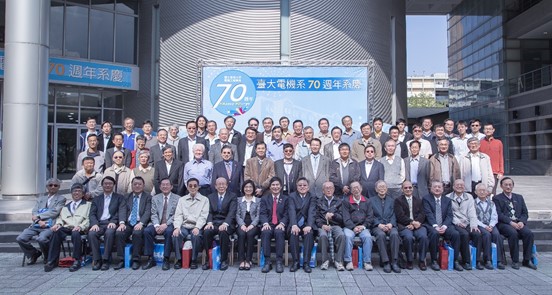
During her term, Chair Liao not only strengthened the department's alumni network but also reinstated the recognition of outstanding alumni. At the end of 2014, Chair Liao commissioned Professor Chiueh Tzi-Dar to plan a series of celebration activities for NTUEE’s 70th anniversary. After a year of planning, the celebration began with an educational forum in November 2015, followed by industry forums and technology forums. Through this series of forum activities, the department played its role of conveying information on cutting-edge technology to the public. Our faculty and alumni actively contributed to the nation and society by showing great concern for important issues related to the development of Taiwan's technology industry and talent cultivation. The main celebration activity and ceremony of the Outstanding Alumni Awards took place on November 28, 2015. On that day, a special publication for the 70th anniversary of the Department of Electrical Engineering was released. Over 500 alumni attended the grand anniversary banquet, marking a perfect conclusion to the event.